
9 min read
Disclosure: As an Amazon Associate and eBay Partner Network publisher, we earn from qualifying purchases. This doesn’t affect what we recommend or how we describe it.
Dog training clickers are one of those rare tools that serve radically different needs: the first-time puppy owner trying to prevent chaos, the seasoned handler shaping complex tricks, and the multi-dog household wrangler desperate for a consistent cue. Each buyer brings a unique set of priorities: some need a clicker that works one-handed on a busy walk, others want a sound adjustable enough for noise-sensitive breeds, and a few just need something their arthritic fingers can operate reliably. The stakes? A clicker that’s mismatched to your situation will gather dust, while the right one can transform training from a shouting match into a quiet, focused conversation.
Which Clicker Design Actually Matches Your Training Style?
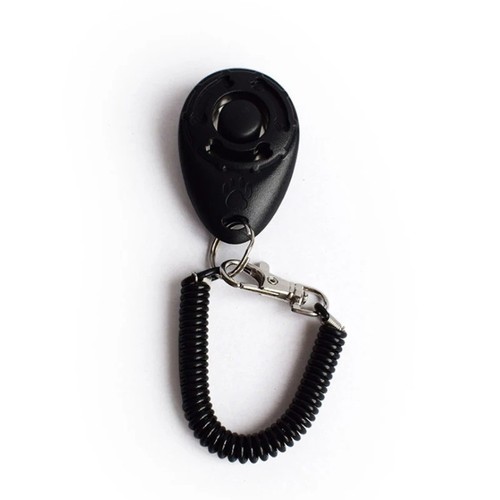
Clickers may look simple, but design details define whether they’ll work for you—or against you. The classic box clicker (the rectangular kind with a metal tongue) produces a sharp, loud click that cuts through distractions. That’s a plus for outdoor training or dogs who ignore softer cues, but it’s overkill for sound-sensitive breeds or nervous puppies. Button-style clickers, often oval with a central button, offer a gentler, quieter sound—ideal for indoor sessions or jumpy rescues. There’s also the ergonomic “teardrop” clicker, shaped to fit comfortably in the palm, often with textured grips for wet or cold conditions. These are easier for trainers with arthritis or those juggling leashes and treats.
Don’t ignore the mounting options: wrist coils, finger loops, keychains, or clip-ons. If you’re clicker training on walks, a wrist coil (usually stretches up to 40 cm) keeps the device handy even when your hands are full. For agility or trick training, a finger loop lets you click and reward in a single smooth motion. Some trainers prefer clickers with built-in volume controls (rare, but available), which can be dialed down for skittish puppies or cranked up for group classes.
Comparison Table: Dog Training Clicker Categories, Features, and Real-World Fit
| Clicker Type | Sound Level (dB) | Ease of Use | Mounting/Attachment | Best For | Price |
|---|---|---|---|---|---|
| Box Clicker | 70–80 dB | Requires moderate thumb strength | Keychain or wrist coil | Outdoor, distracted dogs | $ |
| Button Clicker | 60–70 dB | Easy press, suitable for small hands | Finger loop or clip-on | Puppies, indoor use | $$ |
| Ergonomic/Teardrop | 65–75 dB | Textured grip, arthritis-friendly | Wrist coil or palm-fit | Handlers with mobility issues | $$ |
| Adjustable Volume Clicker | 50–80 dB (adjustable) | Dial or slider for volume | Clip or wrist coil | Multi-dog, sensitive breeds | $$$ |
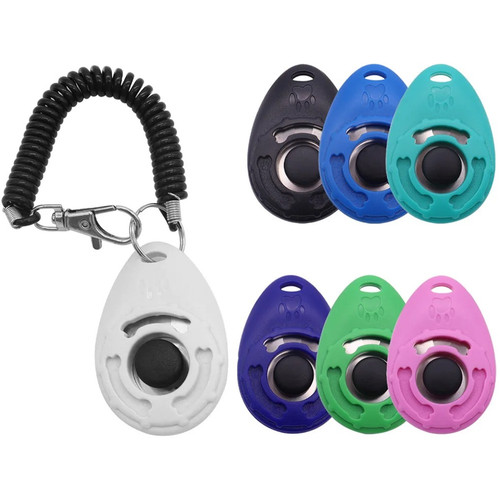
| Multi-Clicker (Multiple Tones) | 60–75 dB per tone | Multiple buttons/colors | Keychain | Multi-dog households | $$$ |
| Wearable/Ring Clicker | 55–65 dB | Hands-free, thumb-activated | Finger ring | Leash walking, agility | $$ |
Pricing context: $, $$, and $$$ are relative ratings against the other products listed above, not absolute dollar ranges. Live current prices follow below.
When Does Clicker Choice Actually Matter? Breed, Age, and Training Contexts
Not every dog responds to every clicker the same way. Herding breeds (think Border Collies, Australian Shepherds) often thrive on sharp, distinct cues—a box clicker’s loud snap can cut through their focus. Conversely, toy breeds and sensitive types (like Cavaliers or some rescued sighthounds) may flinch at volume; a button clicker or adjustable model avoids overwhelming them. For puppies under 16 weeks, start with a softer click and observe their response—overly loud clicks can make early sessions counterproductive.
Senior dogs, especially those with hearing loss, may benefit from clickers with a slightly higher pitch or even a vibration option (though true vibration clickers are rare and usually found as part of multi-modal trainers). Multi-dog households often struggle with signal confusion; a multi-tone clicker lets you assign a unique sound to each dog, reducing mixed signals during group training. For leash-walk training, a wearable or ring clicker frees up your hands, making it easier to manage treats, bags, and the leash simultaneously.
Intensity of training matters too. If you’re teaching rapid-fire tricks, look for a clicker with a quick reset time (under 0.5 seconds between clicks) and a button that won’t stick after heavy use. For outdoor recall drills, prioritize clickers with a sound output above 70 dB—anything softer may get lost in ambient noise.
Check current prices on ergonomic and adjustable clicker options if you’re working with multiple breeds or dogs with special needs.Common Owner Mistakes: Why Clicker Training Fails (and How the Wrong Clicker Contributes)
Many training frustrations trace back to mismatched equipment. The most common error is using a clicker that’s too loud or too quiet for your dog’s temperament. A nervous rescue might become fearful if startled by a 80 dB box clicker, while a determined Lab at the park may not even notice a 60 dB button clicker. Another frequent mistake: fumbling for the clicker mid-session. If you don’t have a secure mounting option (wrist coil, finger loop), you’ll miss the “mark” timing—which weakens the association for your dog.
Some owners stick with a clicker that’s hard to press, leading to inconsistent timing, especially if you have hand pain or are training in cold weather. Others forget to test their clicker’s sound in the actual environment—what’s audible in your kitchen may disappear at the dog park. Always try your clicker in the real-world context before committing to a full training plan.
See what’s available in finger-loop and ring clickers if you struggle with timing or need hands-free control.Total cost of ownership
Clickers are low-tech, but costs can add up if you train regularly or in challenging conditions:
- Replacement clickers: Most plastic-bodied clickers last 1–2 years with daily use; expect to replace them annually if you train multiple dogs ($5–$15/year).
- Attachment accessories: Wrist coils and finger loops often wear out or stretch; plan for 2–3 replacements per year if used daily ($4–$10/year).
- Lost or misplaced units: Small clickers are easy to lose outdoors; many owners buy 2–4 extras as backups, especially for multi-location training ($10–$30/year).
- Advanced features: Adjustable-volume or multi-tone clickers command a premium, and may need battery replacements if electronic (rare, but possible; $2–$8/year for batteries).
- Training treats: Clicker training typically increases treat use; while not part of the clicker, factor in an extra $30–$100/year for high-frequency reinforcement, especially with puppies or multi-dog setups.
While each individual cost is modest, frequent trainers or those with multiple dogs should budget for ongoing replacements and accessories to avoid session disruptions.
What to Look for in Clicker Construction: Durability, Feedback, and Safety
Not all clickers are built the same, and quality matters more than you might expect. The internal metal tongue (for box clickers) or the button mechanism should withstand at least 10,000 clicks without sticking or softening. Look for clickers with ABS plastic housings—these resist cracking if dropped (common during outdoor sessions). Button clickers with a distinct tactile “snap” are easier for consistent timing, especially in fast-paced training.
Avoid clickers with sharp edges or flimsy wrist coils, which can snap under tension or irritate your skin. For households with young children, consider clickers with a recessed button to prevent accidental activation (and endless clicking). If you train in wet weather, seek models with a water-resistant rating (IPX4 or better)—very few meet this, but it’s worth checking if you’re outdoorsy. For those concerned about environmental impact, some clickers use recycled plastics or offer take-back programs for retired devices, though these are niche offerings at present.
For more on canine training tool safety, see the RSPCA’s guidance on humane equipment and positive reinforcement practices.
Compare today’s deals on water-resistant or eco-friendly clicker options if you train outdoors or want a lower-impact choice.Related Guides
- Our guide to Dog Training Clickers, Reviewed and Compared
- Dog First Aid Kits, Reviewed and Compared
- Our guide to How to Teach Your Dog to Heel: Training Tips That Work
- Our guide to Puppy Potty Training Pads That Really Work
- Dog Life Jackets Reviewed: Which Are Truly Safe and Comfortable?
- Our guide to Dog Seat Belts Reviewed: Which Ones Are Safe and Secure?
Dog Training Clickers: Frequently Asked Questions
How loud should a clicker be for outdoor training?
For outdoor environments with moderate noise (like parks or fields), a clicker rated at least 70 dB is ideal. This ensures your dog can reliably hear the cue over distractions. However, always test the clicker in your actual training setting, as ambient noise and wind can affect audibility.
Box clicker vs. button clicker — which is better for puppies?
Button clickers are usually better for puppies and sensitive dogs because they produce a softer, less startling sound (typically 60–70 dB). Box clickers are louder and may frighten young or timid dogs, but work well for robust, high-energy breeds.
Do clickers ever wear out, and how often do they need replacing?
Yes, most clickers will eventually wear out, especially with frequent use. Expect a typical clicker to last 1–2 years if used daily; box clickers with metal tongues may last longer, but plastic buttons can lose their snap or stick over time.
Can I use the same clicker for multiple dogs?
You can, but it’s not always ideal—especially for group training. Dogs may become confused if they hear clicks intended for another. Multi-tone clickers allow you to assign different sounds to each dog, reducing confusion and improving clarity in multi-dog households.
Are there clickers suitable for people with arthritis or limited hand strength?
Yes, ergonomic and teardrop-shaped clickers are designed for easy pressing and comfortable grip. Button clickers with a large, soft-touch button are also easier for those with arthritis or reduced hand strength to operate reliably.
What’s the main reason clicker training fails for new owners?
Poor timing and inconsistent use are the biggest culprits. If the clicker is hard to press, easily lost, or not loud enough for your training environment, you’ll miss the critical “mark” and your dog won’t associate the sound with the desired behavior. The right clicker makes consistent timing much easier.
The Bottom Line: Choose Clicker Features for Your Real Training Life
The best dog training clicker isn’t the fanciest or the cheapest—it’s the one that fits your dog’s temperament, your hands, and your training environment. Prioritize sound level for your dog’s sensitivity, attachment options for your real-world routines, and durability if you train often or outdoors. Don’t be afraid to buy two different types for different scenarios: a loud box clicker for the park, a softer button clicker for home. The right tool won’t train your dog for you, but it will make every session smoother, faster, and more rewarding—for both of you.


Last updated: June 2026 · How we put guides together