8 min read
Disclosure: As an Amazon Associate and eBay Partner Network publisher, we earn from qualifying purchases. This doesn’t affect what we recommend or how we describe it.
Your dog just rolled in something unspeakable on a remote hiking trail, and you’re miles from the nearest hose. Now what? Portable dog showers promise a solution — but not all are truly practical when you’re away from home. This guide breaks down the real-world pros, cons, and trade-offs of the main portable dog shower types, so you can choose the right setup for your dog’s size, coat, and adventures.
Why portable dog showers aren’t all created equal
The market is flooded with “portable” showers, but their actual usefulness varies dramatically. Some are glorified water bottles with a nozzle, barely enough to rinse a Chihuahua’s paws. Others are heavy, battery-powered units requiring a full trunk and a power outlet. The best choice depends on your specific scenario: are you de-mudding a 90-pound retriever at a campsite, or rinsing sand off a terrier at the beach? Capacity, pressure, portability, and ease of use all matter — and the trade-offs are real.
Comparison table: Main types of portable dog showers
| Type | Best For | Water Capacity | Pressure Source | Weight (Empty) | Price |
|---|---|---|---|---|---|
| Manual pump cylinder | Large/dirty dogs, full rinses | 4–8 liters | Hand pump (2–4 bar) | 1.5–2.5 kg | $$$ |
| Gravity-fed bag | Light rinses, backpacking | 2–5 liters | Gravity only | 0.3–0.7 kg | $ |
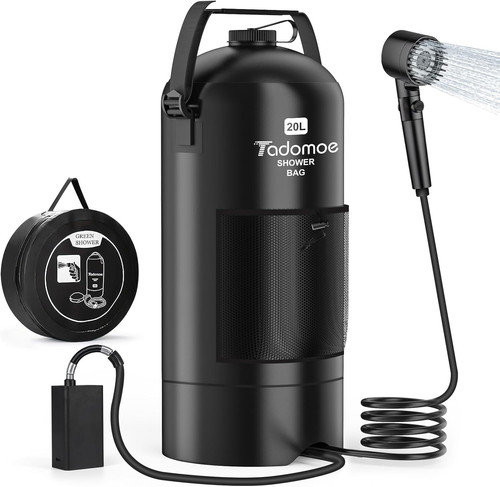
| Battery-powered sprayer | Home/car, medium to big dogs | 5–8 liters | Rechargeable battery (2–3 bar) | 2–3 kg | $$$ |
| Squeeze-bottle nozzle | Quick paw/small dog rinses | 0.5–1 liter | Manual squeeze | 0.2–0.4 kg | $ |
| Portable shower head (hose adapter) | RV/campsite with water supply | — (uses external supply) | External tap/water pressure | 0.5–1 kg | $$ |
Pricing key: $ marks the budget tier, $$ the mid-range, $$$ the premium picks. Tiers are relative to the products in this comparison; actual prices update live below.
How much water do you really need for a portable dog shower?
For a full-body rinse of a medium-sized dog (20–30 kg, short to medium coat), expect to need at least 5 liters of water. Double that for a large, double-coated breed — especially if you want to actually remove dirt from the undercoat, not just surface rinse. Squeeze-bottle or gravity bags under 2 liters are best for spot cleaning: paws, bellies, or post-beach sand removal on small breeds. If you’re hoping to shampoo and rinse a retriever after a mud bath, a manual pump or battery-powered sprayer with 6–8 liters is the minimum practical size.
Keep in mind: higher water pressure is essential for rinsing out soap or thick mud, but it also drains your tank faster. Gravity-fed options conserve water but struggle with heavy coats or stubborn debris. Choose based on your dog’s typical mess level and whether you’ll have a chance to refill during your outing.
Breed size, coat type, and age: What changes your portable shower needs?
Small dogs (under 10 kg) and short-coated breeds are easy to rinse with a basic nozzle or squeeze-bottle system. For thick-coated or double-coated dogs — think Huskies, Golden Retrievers, or Bernese Mountain Dogs — you’ll need higher pressure and more water volume, or you risk leaving soap residue that can cause skin irritation. Older dogs may be more sensitive to cold water, so look for showers that can handle lukewarm water (not just icy tap or lake water).
Puppies and seniors can also be startled by high-pressure sprays. If your dog is nervous, opt for a shower with adjustable flow or a soft spray nozzle. For flat-faced breeds (Bulldogs, Pugs), avoid water entering the nose — a gentle, low-pressure stream is safest.
Manual pump vs. battery power: Which suits your style?
Manual pump showers (pressurized cylinders you pump by hand) deliver the most reliable pressure — typically 2–4 bar — and don’t require batteries or charging. These are ideal for off-grid camping or heavy-duty mud cleanups. The downside: they’re bulkier, and pumping can be tiring if you’re bathing more than one dog.
Battery-powered units offer push-button convenience but add weight and the risk of running out of charge. Most run for 15–30 minutes per charge, which is enough for 1–2 dogs. They’re best for car campers or those who want more comfort and don’t mind recharging. For quick, lightweight outings, gravity bags or squeeze bottles are easier to carry but limited in cleaning power.
See what’s available for the latest manual and battery-powered shower options — compare capacity and battery life side by side.Real-world portability: What fits in your pack, trunk, or carry-on?
If you’re hiking or backpacking, every gram counts. Gravity-fed bags and squeeze nozzles pack down to the size of a water bottle and weigh under 1 kg when empty. Manual pump and battery-powered units, by contrast, take up as much space as a small camping stove and can weigh over 2 kg — before you add water. For road trips or RV life, a larger unit isn’t a problem and gives you more cleaning power.
Check the dimensions before you buy: a typical manual pump cylinder is 40–50 cm tall and 15–20 cm in diameter, which won’t fit in most daypacks. Gravity bags roll up, but you’ll need a tree branch or car door to hang them for use. If you fly often with your dog, stick to compact, non-pressurized options to avoid airline restrictions.
Compare today’s deals on ultralight and travel-friendly portable dog showers.Safety and hygiene: Don’t overlook these details
Water temperature is a common oversight. Many portable showers can only handle cold or lukewarm water (up to 40°C/104°F). If you plan to use warm water, confirm the tank material can handle it — some plastics warp above 45°C. Always test water temperature before spraying your dog, especially for puppies and seniors who are more sensitive to extremes.
Hose length is another factor. A 1–1.5 meter hose is standard; shorter hoses limit maneuverability, making it hard to reach under bellies or rinse paws without awkward lifting. Removable, washable nozzles are a plus for hygiene — especially if your dog has skin sensitivities. According to the Centers for Disease Control (CDC), unclean bathing equipment can harbor bacteria that may irritate sensitive skin or wounds.
Check current prices for shower types with washable nozzles and food-grade materials.Related Guides
Common mistakes to avoid
- 1. Underestimating water needs: Many buyers choose a model with too little capacity, only to run out mid-bath on a muddy dog. For anything more than a quick rinse, go up one size from what you think you need.
- 2. Ignoring hose length: Short hoses sound portable but make it nearly impossible to rinse a squirmy dog’s belly or paws without lifting them awkwardly, risking back strain or dog anxiety.
- 3. Choosing high pressure for nervous dogs: Some showers blast water at 4 bar, startling sensitive or small breeds. Always check if pressure is adjustable, or opt for a softer nozzle if your dog is jumpy.
- 4. Forgetting about water temperature: Some plastics can’t handle hot water, leading to warping or leaks. If you want to use warm water, ensure the shower is rated for at least 40°C.
- 5. Overlooking cleaning: Failing to regularly wash and dry your portable shower can lead to mold, slime, or bacteria buildup — which can cause skin problems for your dog.
FAQs: What dog owners want to know about portable dog showers
How much water does it take to fully bathe a large dog?
For a thorough rinse (including shampoo removal) of a large, double-coated dog, you’ll need 8–10 liters of water. Spot cleaning or paw rinses require much less — 0.5–2 liters depending on the mess and breed.
Manual pump or battery-powered shower: which is better for camping?
Manual pumps are more reliable off-grid since they don’t need charging and deliver higher, more consistent water pressure. Battery-powered units are more convenient but require regular charging and may struggle in very cold weather.
Are portable dog showers safe for puppies and senior dogs?
Yes, but use lukewarm water and gentle pressure. Puppies and seniors are more sensitive to cold and can be startled by strong sprays. Always test the water temperature and use a soft or adjustable nozzle for these age groups.
How long does a battery-powered dog shower last on a single charge?
Most battery-powered portable showers provide 15–30 minutes of continuous spray per charge. This is generally enough for 1–2 full dog rinses, but check the manufacturer’s specs before buying if you have multiple large dogs.
What’s the difference between gravity-fed and pump-action dog showers?
Gravity-fed showers rely on height and gravity to create flow, so water pressure is low and best for light rinses. Pump-action models (manual or battery) generate higher pressure, making them better for deep cleaning thick coats or removing soap quickly.
Can you use portable dog showers with medicated or flea shampoos?
Yes, but it’s crucial to rinse thoroughly — especially with medicated shampoos, which can irritate skin if residue remains. For thick or long coats, use a shower with enough pressure and capacity to flush out all product, as recommended by most veterinary dermatologists.
What’s the typical warranty or return policy for these devices?
Most portable dog showers come with a 1-year limited warranty covering manufacturing defects. Always check the seller’s return policy before purchasing, as water-contact products may have special conditions or restocking fees.
The bottom line: Choose for your dog, not just convenience
No portable dog shower is perfect for every scenario. If you need a true mud-buster for big dogs, invest in a high-capacity pump or powered unit — but accept the bulk and price. For city walks and beach trips with smaller breeds, a gravity bag or squeeze nozzle is light, affordable, and gets the job done. Prioritize water capacity, pressure, and ease of cleaning over flashy features. Your dog — and your car’s upholstery — will thank you.



Last updated: July 2026 · How we put guides together