7 min read
Your dog seems to have an uncanny ability to tell the difference between you popping out to get the mail and you actually leaving for work. It’s not just your imagination—dogs are astoundingly good at reading the small, consistent signals that separate a quick trip outside from a real departure. The science behind this isn’t about mind-reading; it’s about routine, body language, and a sensory toolkit that puts ours to shame. For more detail, see Canine perception of time and routines.
What Signals Tell Your Dog You’re Actually Leaving?
Dogs are masters of pattern recognition. Over dozens or hundreds of departures, they learn to link subtle cues—like the sound of your keys, the sight of your work shoes, or the sequence in which you move through your morning routine—with the length of your absence. For most dogs, it’s not one single action, but the combination and order of events that tip them off. For more detail, see Separation anxiety in dogs.
- Clothing changes: Many dogs distinguish between “leaving clothes” (uniforms, work shoes, jackets) and “staying clothes” (pajamas, workout gear).
- Object cues: Picking up your laptop bag or purse, versus just your phone or a leash.
- Scent layering: Perfume, deodorant, or even the smell of coffee can signal a real departure.
- Sequence of actions: Brushing teeth, grabbing keys, locking doors—dogs notice the order and context.
For example, you might tie your shoes before a run, but only put on your jacket and grab your bag when you head to work. Dogs notice these combinations, not just the actions themselves.
Looking to compare current options? Take a look →
Comparison Table: Which Departure Cues Matter Most?
| Departure Cue | How Dogs Learn It | Strength of Association | How to Change the Cue | Relevant for Puppies/Seniors? |
|---|---|---|---|---|
| Keys/Jingling | Repeated exposure before long absences | High (if always paired with leaving) | Jingle keys at random times when not leaving | All ages, but seniors may rely on this more if sight diminishes |
| Work Shoes | Visual + scent cue, paired with exits | Moderate-High | Wear work shoes around the house sometimes | Puppies may take longer to associate, adults learn fastest |
| Bag/Purse | Visual cue, strong pattern link | High | Pick up bag/purse and sit down, don’t leave | All ages |
| Goodbye Ritual (petting/treats) | Consistent verbal & physical cue | Very High (if always done before leaving) | Vary your goodbye routine | Especially strong for anxious dogs |
| Scent Changes (perfume, deodorant) | Olfactory memory, subtle but powerful | Moderate | Apply scent products at other times | Seniors may depend more on scent |
The Science: How Dogs Read Human Routines
Research in canine cognition shows that dogs don’t just recognize individual objects—they map out the routines and sequences that make up your day. In studies, dogs quickly learn to associate complex chains of human behaviors with outcomes that matter to them, like being left alone or going for a walk.
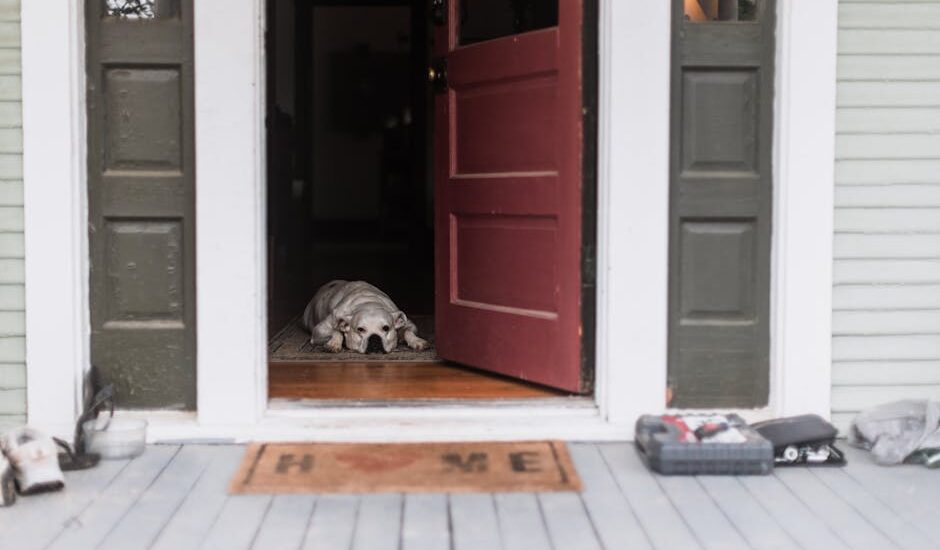
One experiment found that dogs could distinguish between “leaving the house for work” and “leaving for a walk” just by the order in which owners picked up items, changed clothes, or even the time of day. Dogs that experience predictable routines often show anticipatory behaviors—waiting by the door, whining, or seeking comfort—minutes before the owner actually leaves.
Breed Differences: Are Some Dogs More Attuned to Departures?
Not all dogs notice or react to departure cues in the same way. Breeds with strong attachment tendencies or high intelligence—like Border Collies, Poodles, and German Shepherds—tend to pick up on patterns faster. Sighthounds and scent hounds may rely more on visual or olfactory cues, respectively.
- Working breeds: Often more sensitive to routine and more likely to develop separation distress if cues are strong and unvaried.
- Companion breeds: May show more clinginess, shadowing you as your departure routine begins.
- Independent breeds: Sometimes less reactive, but still learn the patterns over time.
Puppies and adolescent dogs are still learning your routines, so their reactions may be inconsistent. Senior dogs, particularly those with declining vision or hearing, may rely more on scent or the vibration of your movements, rather than visual cues.
View available options for breed-specific enrichment toys
Life Stage Considerations: Puppies, Adults, and Seniors
How your dog responds to your departures can shift dramatically with age. Puppies are in the process of forming associations, so their behavior may seem random at first. Adult dogs, especially those who’ve lived with you for years, often become hyper-attuned to the subtlest cues. Senior dogs may lose sensitivity to some signals, but compensate with others—like recognizing your scent or the feel of your footsteps.
- Puppies: May not yet recognize all departure cues; positive reinforcement and varied routines help prevent anxiety.
- Adults: Most likely to show anticipatory behaviors—pacing, whining, or going to their crate—based on learned patterns.
- Seniors: May become confused if routines change abruptly, or if their senses decline; keep cues consistent and gentle.
Compare today’s deals on calming aids for different ages
Common Owner Mistakes That Reinforce Anxiety
Many owners accidentally make departures more stressful for their dogs by sticking to the same routine every day. Over time, this predictability can actually increase anxiety, especially in sensitive breeds or dogs prone to separation distress.
- Always saying a long, emotional goodbye: This can signal to the dog that something significant (and possibly scary) is about to happen.
- Pairing specific objects with departures: Only putting on certain shoes or grabbing a bag when leaving for hours makes those cues loaded with meaning.
- Never varying the routine: Dogs that only see certain cues before long absences may become hypervigilant, reacting even before you intend to leave.
To reduce anxiety, try mixing up your routine: pick up your keys without leaving, put on your jacket and sit down to watch TV, or give your dog a treat without going out. This helps “depower” the cues that signal a long separation.
Can Dogs Really Tell Time? The Role of Circadian Rhythms and Scent Decay
There’s evidence that dogs can sense the passage of time, but not in the way humans do. Instead of reading clocks, dogs rely on circadian rhythms (internal biological clocks) and environmental cues. Intriguingly, some studies suggest dogs may use the fading strength of your scent in the house to estimate how long you’ve been gone.
For example, if you leave at the same time every day, your dog may learn that when your scent is faint or certain environmental cues (like the sun’s angle) align, you’ll likely return soon. This helps explain why some dogs go to the window or door right before you arrive home, even if you don’t follow a strict schedule.
Related Guides
FAQ: What Dog Owners Actually Want to Know
Why does my dog get anxious only when I leave for work, not for short errands?
Your dog has learned that your “work” routine—specific clothes, bag, and timing—means a longer absence, while short trips involve different cues. The stronger and more consistent the routine, the more likely your dog will react with anxiety or anticipation.
Can I train my dog not to react so strongly to my departure?
Yes, you can “desensitize” your dog to departure cues by mixing up your routine and practicing departures without actually leaving. Gradually increase the time you’re gone and provide enrichment or comfort items to reduce anxiety. For persistent distress, consult a qualified trainer.
Do certain breeds have a harder time with departures?
Breeds bred for companionship or work (such as retrievers, herding breeds, and toy breeds) tend to be more sensitive to changes in routine and more prone to separation-related behaviors. Independent breeds may show less distress but still notice your patterns.
Is it better to ignore my dog when I leave?
For dogs prone to separation anxiety, minimizing the drama of departures and arrivals can help. Keep goodbyes and greetings low-key to avoid building anticipation or anxiety around these moments.
Do puppies eventually grow out of reacting to departures?
Puppies often become less reactive as they mature and learn that you always return. However, if departure anxiety is reinforced, it can persist into adulthood. Early training and gradual desensitization are key.
Can dogs tell how long I’ll be gone by the time of day?
Dogs can learn time-based patterns, especially if your schedule is consistent. They may associate certain departure cues with longer absences (like work hours) and others with short trips, reacting accordingly.
How to “De-Power” Your Departure Cues
If your dog seems to know exactly when you’re leaving for hours versus minutes, the solution isn’t to hide your keys or tiptoe out. Instead, work to break the association between specific cues and long absences. Pick up your bag and sit on the couch, put on your shoes and make a snack, or jingle your keys randomly throughout the day. Over time, your dog will stop linking these actions exclusively with your departure.
For dogs who already show signs of distress, try introducing a special treat or toy that only appears when you leave, so departures become less stressful and more predictable in a positive way. See what’s available for enrichment toys and calming aids
The Takeaway: Your Dog’s Superpower Is Routine—And You Can Use It Wisely
Your dog isn’t psychic—they’re just highly observant, with sensory abilities and pattern recognition skills far beyond what most owners realize. By understanding which cues your dog responds to, and how those cues are learned, you can reduce anxiety, build confidence, and make departures less stressful for both of you. The most effective approach: vary your routine, use positive associations, and treat your dog’s anticipation as a sign of their deep bond with you—not a flaw to be fixed, but a relationship to be managed thoughtfully.