9 min read
Disclosure: As an Amazon Associate and eBay Partner Network publisher, we earn from qualifying purchases. This doesn’t affect what we recommend or how we describe it.
Puppy playpens aren’t just a convenience—they’re a make-or-break tool for safe training, managing chaos, and protecting both your pup and your home. The wrong playpen can lead to bent bars, chewed-through mesh, or even a puppy escape that sets back house training by weeks. The right one, sized and selected for your breed and living space, prevents those headaches and gives your dog the secure, positive start they deserve.
How Different Puppy Playpen Styles Actually Perform in Real Homes
Not all playpens are created equal. Some are glorified baby gates, others are robust enough to contain a determined large-breed puppy. Here’s a side-by-side comparison of the most popular playpen categories, with real-world decision points that matter for dog owners—not just marketing slogans.
| Playpen Profile | Recommended for | Material & Build | Setup Footprint | Escape/Destruction Risk | Ease of Cleaning | Portability | Price Range |
|---|---|---|---|---|---|---|---|
| The ultra-sturdy metal panel option | Large breeds, power chewers, jumpers | Steel or iron, 8+ panels, 24–40″ tall | 16–64 sq ft (configurable) | Very low (bars 1.2–1.5″ spacing) | Wipeable, may rust if left wet | Bulky, 20+ lbs; not for travel | $$–$$$ |
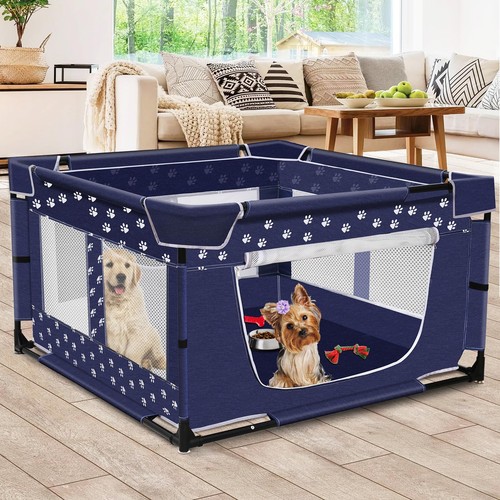
| The soft-sided lightweight travel pick | Tiny/toy breeds, travel, indoor use | Oxford cloth, mesh, zip top, 6–8 panels | 8–20 sq ft | Moderate (can chew/roll over) | Machine washable, dries fast | Very light, folds flat, under 10 lbs | $–$$ |
| The modular plastic setup | Small–medium breeds, indoor/outdoor | HDPE plastic, 4–8 panels, 24–34″ tall | 12–36 sq ft (expandable) | Low (rounded edges, no bars) | Hose off, no rust risk | Medium weight, stackable | $$ |
| The wire exercise pen standard | Medium breeds, budget setups | Coated wire, 6–8 panels, 24–36″ tall | 16–32 sq ft | Moderate (bars 1.5–2″ spacing) | Wipeable, may snag fur | Folds flat, 10–20 lbs | $–$$ |
| The expandable wooden look | Calm puppies, stylish homes | Wood slats, 4–6 panels, 20–30″ tall | 8–24 sq ft | High (chewable, climbable) | Spot clean, can stain | Heavy, not portable | $$$ |
When you want a brand-new unit with the full warranty, Amazon’s catalogue is usually the deepest.
Find on Amazon →Deciding Which Playpen Profile Fits Your Puppy—and Your Space
The best playpen for your puppy isn’t always the sturdiest or the prettiest—it’s the one that suits your dog’s breed, age, temperament, and your living situation. Here’s how to match the right playpen to your actual needs.
For Large Breeds and Escape Artists: Don’t Skimp on Height and Metal Strength
Giant and working breeds (think Labs, Goldens, Shepherds, and especially Huskies) can clear 24-inch panels by 16 weeks old. For these puppies, a playpen under 30 inches tall is a wasted investment. Look for steel or iron panels with at least a 1.2-inch bar spacing—wider gaps allow heads and paws to get stuck. Expect to pay more for the extra weight and hardware, but it’s worth it for safety and peace of mind.
Check current prices for heavy-duty options if you’re raising a future athlete or notorious chewer.
For Toy and Small Breeds: Prioritise Portability and Chew Resistance
Small breed puppies (like Yorkies, Chihuahuas, and Toy Poodles) need containment, but don’t require the industrial strength of metal pens. Soft-sided or modular plastic pens are lightweight enough to move from room to room and can double as a travel crate. Make sure mesh is reinforced and that zippers are out of reach—some clever pups learn to nose open a poorly placed zip in days.
View available options for soft-sided and plastic playpens designed for small, less destructive breeds.
For Medium Breeds and Flexible Use: Wire Exercise Pens Hit the Sweet Spot
Wire exercise pens offer a balance of affordability and adaptability. They’re suitable for medium breeds (spaniels, terriers, corgis) and can be used both indoors and out. Look for pens with at least 8 panels and a coating to resist rust if you plan to use them outdoors. Bar spacing should be no more than 2 inches to prevent squeezing through. Some can be expanded with extra panels if your pup needs more room as they grow.
See what’s available for wire pen setups that can grow with your puppy.
What Most Playpen Reviews Leave Out: Safety Details That Actually Matter
Playpens are only as safe as their weakest point—and puppies are experts at finding those. Here are the overlooked features that separate a safe playpen from one that’s just a temporary barrier.
- Bar Spacing: Never choose a pen with gaps wider than 2 inches for puppies under 20 lbs; larger breeds may need even tighter spacing to prevent head or paw entrapment.
- Secure Latches: Spring-loaded or twist-lock latches are a must for any pen with a gate. Simple hook latches are easily pawed open by clever pups.
- Non-Toxic Finishes: Powder-coated metal or BPA-free plastics reduce risk if your puppy chews on the bars or panels.
- Stability: Playpens under 15 lbs are easily tipped by active puppies unless anchored. Look for options with non-skid feet or the ability to anchor to a wall or floor.
- Flooring: Most playpens don’t include a floor. For house training, a waterproof mat or tray is essential—look for options that specify compatibility with 24×24″ or 32×32″ mats.
Breed-Specific Playpen Mistakes—and How to Avoid Them
Owners often underestimate just how quickly puppies grow, especially in large breeds. A playpen that fits a 10-pound, 8-week-old Retriever will be laughably inadequate by 16 weeks. For working and herding breeds, a pen that’s too small (under 16 sq ft) leads to frustration, barking, and destructive behaviour. For toy breeds, the opposite is true: too large a space can delay house training, as puppies may eliminate in one corner and play in another.
Never assume a playpen is “escape-proof” just because it says so on the box. Terriers and hounds, in particular, are notorious for digging, climbing, or nosing open weak points. Always supervise until you’ve seen your puppy respect the boundaries over several days.
Real-World Setups: Playpen Placement and Puppy Routines
Where you place your playpen matters just as much as which one you choose. A pen in the laundry room may be out of sight but can make your puppy feel isolated—leading to barking or anxiety. Place the pen in a high-traffic area, but away from direct drafts or intense sunlight. If using a playpen for house training, pair it with a crate and a waterproof pad. For apartment dwellers, measure your available floor space before buying—an 8-panel metal pen can easily take up a third of a living room.
If you plan to use the playpen outdoors, check that the base can be anchored (some models allow stakes) and that the material is rated for UV and rust resistance. Never leave a puppy unattended outside, even in a “secure” pen—predators and overheating are real risks.
When you want a brand-new unit with the full warranty, Amazon’s catalogue is usually the deepest.
Compare Options on Amazon →FAQ: Puppy Playpens—What Owners Really Ask
How big should a puppy playpen be?
For most puppies, a minimum of 16 square feet (e.g., a 4×4 ft area) is recommended. Large breeds or multiple puppies may need at least 32 square feet. Too much space can hinder house training for small breeds, so scale the size to your dog’s age and toileting habits.
Can a playpen replace a crate for house training?
No. Playpens offer more space and freedom, but they don’t provide the den-like security of a crate. Many owners use both: the crate for overnight confinement and the playpen for safe daytime play. For house training, always supervise and limit the area as your puppy learns.
What’s the safest material for a puppy playpen?
Powder-coated steel and BPA-free HDPE plastic are generally the safest, as they resist chewing and don’t splinter. Soft-sided pens are safe for gentle breeds but can be chewed through by determined puppies. Always check for sharp edges and toxic finishes before use.
How do I stop my puppy from climbing or tipping the playpen?
Choose a pen at least twice your puppy’s shoulder height, with vertical sides and no horizontal bars for climbing. Anchor lightweight pens to the floor or wall, and supervise until you’re confident your puppy can’t escape. For climbers, a mesh or zippered top is a helpful addition.
Can I use a puppy playpen outdoors?
Yes, but only pens rated for outdoor use (UV-resistant, rust-proof) should be left outside. Secure the base with stakes if possible, and never leave a puppy unattended. Move the pen regularly to prevent damage to grass and to avoid overheating in direct sun.
How long can I leave my puppy in a playpen?
Puppies under 6 months shouldn’t be left in a playpen for more than 2–3 hours at a stretch, except overnight. Puppies need social interaction, bathroom breaks, and mental stimulation. Use the playpen for short periods when you can’t supervise directly, not as a substitute for attention.
Is it safe to use a playpen for multiple puppies at once?
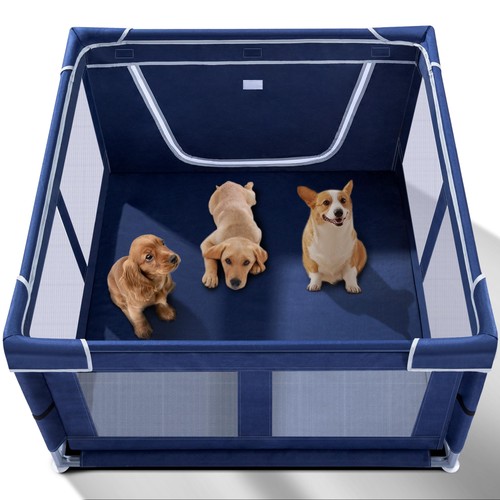
Yes, but the pen should be at least 50% larger for each additional puppy, and you’ll need to monitor for rough play or resource guarding. Make sure there are multiple water bowls and toys, and that the floor surface is non-slip to prevent injuries during play sessions.
What flooring should I use under a playpen for house training?
A waterproof mat or tray sized to the pen’s footprint (commonly 24×24″ or 32×32″) is ideal for protecting floors and containing accidents. Avoid towels or blankets alone, as they soak through quickly. Look for mats that are non-slip and machine washable for easier cleanup.
Will a playpen work for senior dogs or only for puppies?
While designed for puppies, playpens can also be useful for senior dogs recovering from surgery or needing a safe, confined area. Choose a pen with low entry points if your senior dog has mobility issues and ensure the flooring is padded to prevent pressure sores or slips.
What’s Worth Paying For—and What’s Overhyped—in Puppy Playpens
Pay extra for structural safety: reinforced corners, secure latches, and chew-proof materials. Don’t overspend on “convertible” features you’ll never use, or on designer looks that add no real function. Most owners find that investing in the right size and material for their breed saves money (and frustration) in the long run—especially if you plan to use the pen for future dogs or as a yard barrier later.
Ready to find the best fit? Compare today’s deals on heavy-duty, portable, and expandable playpen options tailored to your pup’s real needs.
The Bottom Line: Safety and Sizing Matter More Than Fancy Features
A great puppy playpen isn’t about bells and whistles—it’s about matching your dog’s breed, age, and habits to a secure, easy-to-clean, and escape-resistant setup. Prioritise durability and the right size over aesthetics. With a little planning, you’ll have a tool that supports house training, keeps your puppy safe, and saves your furniture (and your sanity) through those wild first months.
Related Guides
- Puppy Potty Training Pads That Really Work
- Is Diarrhea a Sign of Dehydration in Dogs? What Owners Should Know
- Our guide to How to Help Your Dog Relax Around Your Cat: A Step-by-Step Guide
- Slow Feeders vs Puzzle Feeders: Which Is Better for Your Dog?
- Tips for Managing a 1-Year-Old, 8-Month-Old Dog’s Behavior and Training
- Browse all Buying Guides →