
8 min read
Disclosure: As an Amazon Associate and eBay Partner Network publisher, we earn from qualifying purchases. This doesn’t affect what we recommend or how we describe it.
The biggest mistake people make with automatic dog feeders is assuming any model will work for any dog. But what actually matters is how your dog’s size, age, eating style, and household routine align with a feeder’s portion control, reliability, and safety features. Not all feeders are built for large breeds or fast eaters, and some have gaps that a determined pup can exploit. This review cuts through the noise, focusing on how real-world feeder categories stack up for different needs—and what to watch out for so you don’t end up with a $100 plastic paperweight or a dog who’s hungrier (and sneakier) than ever. For more detail, see Research on feeding frequency and dog health.
Which Automatic Dog Feeder Profile Fits Your Situation?
| Profile | Best For | Meal Capacity | Portion Size Range | Programmable Schedules | Power Source | Notable Limitations | Who Should Avoid |
|---|---|---|---|---|---|---|---|
| Large-capacity, heavy-duty | Big dogs, multi-dog homes, long workdays | Up to 7L/30 cups dry food | 15–500g per meal | Up to 6 meals/day | Plug-in + battery backup | Bulky, 5–8kg footprint | Tiny breeds, small kitchens |
| Small-portions, slow-feed | Puppies, small breeds, fast eaters | 2–4L/8–16 cups | 5–100g per meal | Up to 8 meals/day (smaller portions) | Battery or plug-in | Not for kibble over 13mm diameter | Large breeds, wet food |
| Wet-food compatible, segmented | Dogs on canned/fresh diets, meds | 4–6 compartments (180–400g each) | One compartment/meal | Up to 6 timed meals | Battery | Needs regular cleaning, limited meals | Large, free-feeding dogs |
| App-controlled, smart feeder | Tech-savvy owners, variable routines | 3–6L/12–24 cups | 10–250g per meal | Unlimited via app | Plug-in, backup battery | WiFi reliant, higher cost | Tech-averse, spotty WiFi |
| Budget basic, manual timer | Occasional use, budget buyers | 1–2L/4–8 cups | Fixed or limited options | 1–2 meals/day | Battery | No backup, basic controls | Large dogs, strict diets |
When you want a brand-new unit with the full warranty, Amazon’s catalogue is usually the deepest.
Find on Amazon →What Actually Matters: Reliability, Portion Accuracy, and Food Safety
Most automatic feeders look similar at a glance, but the devil is in the engineering. Feeders for big dogs need a hopper and motor that won’t jam with 15mm+ kibble, plus a locking lid that resists persistent noses. For small dogs or puppies, a feeder must handle tiny portions—down to 10g at a time—without inconsistency or spillage. If your dog’s on wet or fresh food, only a segmented feeder with removable, dishwasher-safe trays will keep things hygienic and safe.
Portion accuracy is a genuine weak point in many feeders. Models rated for 5–100g portions often vary by 5–10g per serving, which adds up if you’re managing a strict diet or a dog prone to weight gain. Look for feeders with stepper-motor dispensing (rather than simple flaps or gravity), and always check the manual’s minimum and maximum kibble size—some jam with round or flat kibble over 13mm.
Breed, Age, and Feeding Style: Choosing Right for Your Dog
Giant breeds (think 35kg+) need a feeder with a hopper of at least 5L (20 cups) and a portion size that can deliver 200g or more per meal. Small breeds and puppies, by contrast, benefit from feeders that can break meals into 20g increments, with a bowl height under 7cm for easy access. Flat-faced breeds (bulldogs, pugs) need shallow, wide bowls to prevent face smushing and food frustration—avoid deep, narrow chutes.
Fast eaters or dogs prone to bloat require a slow-feed function: look for feeders that dispense meals in multiple mini-portions over 10–20 minutes, or segmented trays that rotate to reveal food gradually. Senior dogs may need a feeder with voice recording to encourage eating, and a bowl with a non-slip base for stability.
Common Owner Mistakes with Automatic Feeders
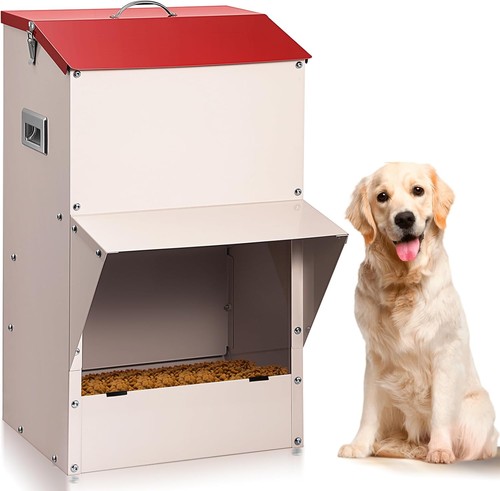
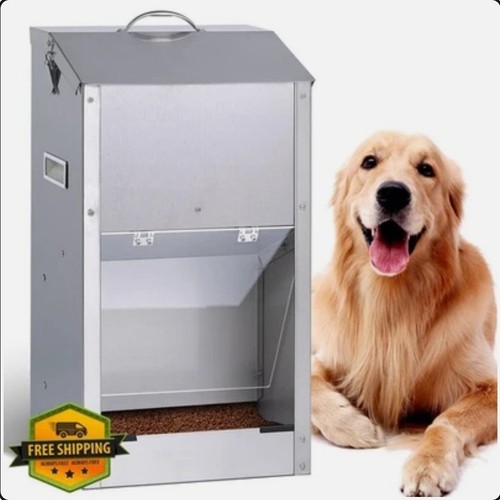
- Using gravity feeders for diet-controlled dogs: Gravity hoppers keep bowls full, defeating the purpose of portion control. Only use timed, motorized feeders if you need strict meal management.
- Ignoring minimum and maximum kibble size: Feeders jam or mis-disperse with the wrong kibble shape. Always measure your kibble; most feeders specify a 5–12mm range.
- Assuming battery backup is optional: Power outages or unplugged cables can mean missed meals. For dogs with medical needs or strict schedules, dual power (plug + battery) isn’t negotiable.
- Forgetting to clean: Wet-food feeders need daily washing. Even dry-food hoppers develop stale food and mold if not cleaned every 2–4 weeks.
Safety and Security: Preventing Break-Ins and Mishaps
Determined dogs can tip, paw, or chew their way into unsecured feeders. For medium and large breeds, choose a feeder with a locking lid and a weighted base of at least 2kg. Look for models with pet-proof buttons (flush or hidden controls) to prevent accidental reprogramming. If you have a multi-dog home, segmented feeders with microchip or collar-activated lids can help ensure only the right dog gets access—though these are typically more expensive and require collar tags.
Never use a feeder as a substitute for supervision over more than 24 hours. Even the best automatic feeders can malfunction—motors jam, batteries die, or food bridges clog the hopper. For dogs on medication, always have a backup plan if the feeder fails.
Smart Feeders vs. Simpler Timers: Is App Control Worth It?
App-controlled feeders let you adjust meal times and quantities remotely, track feeding history, and sometimes even trigger a voice call to your dog. These are ideal if your schedule changes or you travel frequently. However, they rely on stable WiFi and cost 2–3 times more than basic timer models. If your routine is predictable and you don’t need remote tweaking, a manual or digital timer may be simpler and less failure-prone.
Some smart feeders also send alerts if the food runs low or a meal fails to dispense, which can be essential for dogs on strict regimens. Just be aware that app updates and connectivity issues can occasionally disrupt schedules—always test thoroughly before relying on one for critical routines.
How to Size and Set Up a Feeder for Your Specific Dog
Measure your dog’s daily food volume in cups or grams, and choose a feeder with a hopper at least 1.5x that size if you want to refill weekly. For large dogs eating 300g/day, a 5L feeder (roughly 20 cups) lasts about 5–6 days. For small breeds at 70g/day, even a 2L feeder may go more than a week. Bowl height should match your dog’s shoulder height for comfort—aim for a bowl lip 2–5cm below the chest for most breeds.
Test the feeder with your dog present: some are startled by motor noise or bowl vibration. If your dog is anxious, choose a feeder with a quieter stepper motor (under 60dB rated) and avoid voice-recording features that may confuse or upset sound-sensitive dogs.
Compare today’s dealsCleaning and Maintenance: Keeping Meals Safe and Fresh
Most dry-food feeders have removable hoppers and bowls. Look for BPA-free plastic or stainless steel, and dishwasher-safe parts for easy cleaning. Wet-food feeders demand daily washing—choose models with sealed, removable trays and avoid anything with hard-to-clean corners. For dry-food feeders, clean the hopper and bowl every 2–4 weeks to prevent mold, stale odors, and oil buildup from kibble.
Replace batteries every 3–6 months, or sooner if you notice irregular feeding. For plug-in models, check that the cord is chew-proof and safely routed away from playful paws.
View available optionsWhen you want a brand-new unit with the full warranty, Amazon’s catalogue is usually the deepest.
Compare Options on Amazon →FAQs: Real Answers to Automatic Dog Feeder Questions
How do automatic dog feeders handle multiple dogs?
Standard feeders will not prevent food stealing between dogs. For multi-dog homes, look for feeders with microchip/collar-activated lids or physically separated compartments. These help ensure that only the intended dog gets access, but they do require your dogs to wear compatible tags.
Can automatic feeders dispense wet or raw food?
Only segmented, tray-style feeders can handle wet or raw food, and they usually max out at 4–6 meals before needing a refill. These trays must be cleaned daily to prevent spoilage and bacteria. Standard rotating or gravity feeders are not safe for anything but dry kibble.
Will a feeder help with dogs that eat too fast?
Some feeders offer slow-feed modes, dispensing small portions over several minutes to reduce gulping and the risk of bloat. Segmented feeders that reveal food gradually are also effective for fast eaters. Always check the product specs for a true slow-feed function, not just a small portion setting.
What happens if the power goes out?
Feeders with battery backup will continue to operate on batteries if the power fails. Pure plug-in models will stop until power is restored. For critical routines, always choose a feeder with dual power and regularly check battery strength.
How accurate are portion sizes in automatic feeders?
Portion accuracy can vary by 5–10g per meal, especially with large or irregular-shaped kibble. Stepper-motor feeders tend to be more precise than flap or gravity models. If your dog is on a strict diet, monitor portions for the first week and adjust settings as needed.
Do feeders work for puppies under 12 weeks?
Most feeders are designed for dogs eating solid, dry kibble at least 5mm in diameter. For very young puppies, hand-feeding or small, frequent manual meals is safest until they’re ready for standard kibble and can manage bowl eating without supervision.
See what’s availableBottom Line: The Right Feeder Makes All the Difference
The best automatic dog feeder is the one that actually matches your dog’s size, eating style, and your real-life routine—not the flashiest or most expensive option. For big dogs or multi-pet homes, prioritize capacity, locking lids, and power backup. Small dogs and fast eaters need portion precision and slow-feed features. Don’t skip on cleaning, and always test the feeder before relying on it for days away. Choose based on your dog’s needs and your own schedule, and you’ll get real peace of mind—not just another gadget taking up counter space.
Related Guides