
9 min read
Disclosure: As an Amazon Associate and eBay Partner Network publisher, we earn from qualifying purchases. This doesn’t affect what we recommend or how we describe it.
Hands-free dog leashes sound like a simple upgrade, but in reality, they’re a major shift in how you walk, run, or hike with your dog. The most important thing to know: not every hands-free leash is actually safer or more comfortable than a traditional one, and the right pick depends heavily on your dog’s size, strength, and temperament — as well as your own walking habits. Runners, city walkers, and owners of powerful pullers all need different features. Before you buy, it pays to get specific about what separates a genuinely secure, comfortable hands-free leash from a risky or frustrating one.
What Sets Hands-Free Dog Leashes Apart from Regular Leashes?
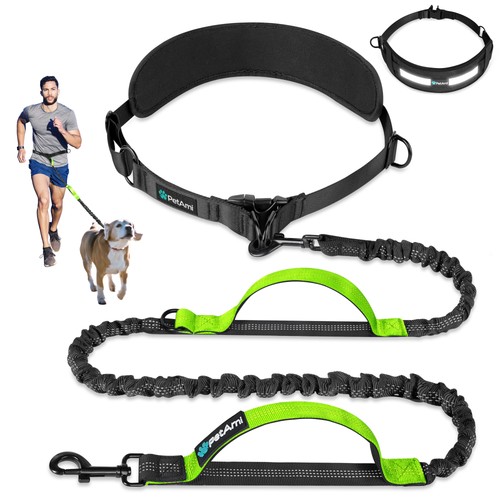
Unlike standard leashes, hands-free options attach around your waist, across your body, or even to a backpack harness, letting you move freely while keeping your dog tethered. This setup is a game-changer for runners, people who multitask on walks (think coffee or stroller), and anyone with mobility issues. But they’re not all created equal — the safest hands-free leashes use shock-absorbing sections, quick-release buckles, and reinforced stitching rated for dogs up to 110 lbs or more. Some include dual handles for extra control, while others focus on ultra-lightweight designs for distance running. The wrong choice can mean a lost coffee, a painful jolt to your back, or worse, a loose dog if a cheap clip fails.
When you want a brand-new unit with the full warranty, Amazon’s catalogue is usually the deepest.
Find on Amazon →Comparison Table: Hands-Free Dog Leash Buying Profiles
| Buying Profile | Best For | Leash Length | Elastic/Tension Control | Max Dog Weight | Safety Features | Unique Advantage |
|---|---|---|---|---|---|---|
| The heavy-duty puller solution | Strong, large breeds prone to lunging | 4–6 ft adjustable | Heavy-duty bungee (stretches 12–18″) | Up to 110 lbs | Dual handles, locking carabiner, reinforced stitching | High shock absorption, quick-grab control |
| The lightweight runner’s pick | Active owners with medium/small dogs | 6–7 ft fixed or retractable | Minimal or light bungee | Up to 50 lbs | Reflective threading, low-profile buckle | Ultra-light, won’t bounce or chafe |
| The multi-dog walker | Walking two dogs at once | Dual 4–5 ft leads (swivel) | Bungee in splitter section | Up to 80 lbs combined | Tangle-free coupler, quick-release | Independent movement, less leash burn |
| The urban safety choice | City walkers, crowded areas | Adjustable 3–5 ft | Optional bungee, short lead | Up to 70 lbs | Traffic handle, reflective striping | Maximum control in tight spaces |
| The hiking & adventure option | Trail hikers, variable terrain | 8–10 ft adjustable | Long bungee (18″+ stretch) | Up to 90 lbs | Carabiner clip, water-resistant, stash pouch | Freedom of movement, gear storage |
| The budget everyday pick | Casual walkers, small breeds | 5–6 ft fixed | No bungee or light stretch | Up to 40 lbs | Basic side-release buckle | Affordable, simple, easy to use |
How Different Dog Sizes and Temperaments Change What You Need
Not all hands-free leashes are safe for every dog. For example, a 70-lb adolescent Labrador who surges after squirrels can snap a basic waist-worn leash or pull you off balance. In this case, look for leashes specifically rated for at least 100 lbs, with reinforced webbing (minimum 1.5″ wide), a locking carabiner, and a bungee section that stretches at least 12 inches to absorb shock. For small breeds under 20 lbs, a thinner, lighter belt (under 1″ wide) with a shorter lead keeps weight and bulk down, but you still want a strong clip — ideally rated to 150 lbs of pull to avoid breakage from sudden lunges.
With reactive or unpredictable dogs, choose models with a built-in traffic handle positioned within 18 inches of the collar clip. This lets you grab control instantly if you need to pull your dog close. For mellow seniors or well-trained adults, you can prioritize comfort and flexibility, but always verify that the leash hardware is rated above your dog’s actual weight by at least 25% to account for sudden force.
Critical Safety Details: What Most Owners Overlook
True hands-free leashes are only as strong as their weakest point. The most frequent failure? Not the leash itself, but the belt buckle or carabiner clip. Look for metal buckle systems (not just plastic side-release) for dogs over 50 lbs, and check for a carabiner with a twist-lock or screw-lock closure. Avoid snap hooks if your dog pulls hard — they can unclip or bend under force.
Another overlooked factor is belt width and padding. For running, a belt under 2″ wide with neoprene padding prevents chafing and hot spots, while hiking leashes may use wider, thicker belts to distribute force. If you plan to use the leash for both walking and jogging, prioritize adjustability — a belt that fits waists from 28″ to 48″ and a leash that extends from 4 to 7 feet allows for both control and freedom. Finally, always test the quick-release mechanism before heading out. In an emergency, you need to detach your dog in under two seconds, even with gloves on.
Want to compare the safest options? View available hands-free leash profiles.
Breed-Specific and Life Stage Advice for Hands-Free Leashes
Owners of sighthounds (like Greyhounds or Whippets) should know these breeds can slip out of collars if startled. Use a hands-free leash only with a secure harness, not a martingale or flat collar. For brachycephalic breeds (Bulldogs, Pugs), avoid leashes that attach high on the back, which can exacerbate breathing issues — choose a leash that clips near the chest or lower back harness loop.
Puppies under 6 months rarely have the impulse control for hands-free walking; it’s safer to use a standard leash until loose-leash manners are reliable. For seniors or dogs with arthritis, look for leashes with minimal bungee (under 8″ stretch) to avoid excessive tugging. If you have a double-coated breed like a Husky, ensure the belt is breathable and moisture-wicking, as these dogs can overheat with thick padding against their fur.
Common Owner Mistakes with Hands-Free Leashes (and How to Avoid Them)
- Using a leash not rated for your dog’s weight: Always check the maximum pull force — a leash rated for 40 lbs will not hold a 70-lb dog in full sprint.
- Attaching to a collar instead of a harness: Especially risky for strong pullers or dogs prone to trachea injury. Use a front-clip or Y-style harness for safer force distribution.
- Overlooking quick-release features: In busy areas or near traffic, you may need to detach instantly. Test the mechanism before every walk.
- Not adjusting belt fit: A loose belt can twist or ride up, causing discomfort or loss of control. Adjust to fit snugly above your hips — not your waist — for best leverage.
- Ignoring leash length for your environment: Long leashes (over 6 ft) are great for trails, but risky in crowds or near roads. Choose leashes with adjustable lengths for maximum versatility.
Want to see which leash profiles fit your breed and walking style? Compare today’s deals.
When a Hands-Free Leash Is (and Isn’t) the Right Choice
Hands-free leashes are ideal for runners, multi-taskers, and owners with good leash-trained dogs. They’re also popular with parents pushing strollers, as they free up both hands. But they’re not recommended for dogs who are leash-reactive, unpredictable around other animals, or prone to bolting — in these cases, you may need the instant control of a hand-held leash or a dual-clip system (one hand-held, one belt-attached). For off-leash recall training, avoid hands-free leashes, as they can inadvertently reward pulling or lunging if the dog gets too much slack.
Planning a new walking routine? See what’s available in hands-free leash options.
When you want a brand-new unit with the full warranty, Amazon’s catalogue is usually the deepest.
Compare Options on Amazon →FAQ: Real Questions About Hands-Free Dog Leashes
Are hands-free leashes safe for large, strong dogs?
They can be, but only if rated for the dog’s weight and pulling strength (look for options supporting at least 100 lbs of force). Always use with a secure harness, not a collar, and test the buckle and carabiner before each use.
Can you run with a hands-free leash if your dog pulls?
It’s possible, but only with a leash that has a strong bungee section (stretches 12–18 inches) and dual handles for control. If your dog is still learning not to pull, consider additional training before transitioning to hands-free running.
Will a hands-free leash work for two dogs at once?
Some models include a double coupler with swivel attachments and bungee sections for each lead. Make sure the combined weight doesn’t exceed the leash’s maximum rating, and that the splitter allows independent movement to prevent tangling.
What’s the best way to fit the belt for comfort and safety?
Adjust the belt to sit snugly just above your hip bones (not your waist), as this position gives you better leverage and reduces strain on your back. Padded belts 2 inches wide or more help prevent chafing during longer walks or runs.
Can puppies use hands-free leashes?
Puppies under 6 months typically lack the impulse control for safe hands-free walking. Wait until your puppy reliably heels and responds to leash cues before making the switch, and always start with short, low-distraction walks.
Are hands-free leashes allowed in all public spaces?
Most public parks and trails allow hands-free leashes as long as your dog remains under control and the leash is under 6 feet. Always check local regulations, as some areas require traditional hand-held leashes or have maximum length limits.
How do I know if the bungee section is strong enough?
Check the product specifications for the maximum stretch length (ideally 12–18 inches for large dogs) and the rated force (should match or exceed your dog’s weight). Thicker bungee cords and reinforced stitching are safer for powerful pullers than thin, decorative elastic sections.
What maintenance does a hands-free leash require?
Inspect all hardware (buckles, carabiners, stitching) regularly for signs of wear, especially after exposure to water or mud. Wash fabric belts and leash sections according to manufacturer instructions—usually cold water and air drying to avoid weakening materials. Replace immediately if you notice fraying, stretching, or bent clips.
My Take: Who Should (and Shouldn’t) Choose a Hands-Free Dog Leash
Hands-free leashes are a revelation for runners, urban walkers, and anyone whose dog is already a loose-leash pro. But they’re not magic for pullers or dogs still in training. The best hands-free leash is one that matches your dog’s weight, temperament, and your own walking style — with safety features you can trust in a real-world emergency. Prioritize quality hardware, force ratings, and adjustability over gimmicks. For the right team, it’s the most freeing way to walk together — but never at the expense of safety or control.
Related Guides
- Our guide to Dog Poop Scoopers, Reviewed for Cleaner Walks
- Is Diarrhea a Sign of Dehydration in Dogs? What Owners Should Know
- Our guide to How to Help Your Dog Relax Around Your Cat: A Step-by-Step Guide
- Our guide to Slow Feeders vs Puzzle Feeders: Which Is Better for Your Dog?
- Tips for Managing a 1-Year-Old, 8-Month-Old Dog’s Behavior and Training
- Browse all Training & Behaviour →