8 min read
Disclosure: As an Amazon Associate and eBay Partner Network publisher, we earn from qualifying purchases. This doesn’t affect what we recommend or how we describe it.
Are any dog deshedding vacuums truly effective, or do they just rearrange the tumbleweeds of fur? The short answer: most vacuums marketed for dog hair don’t actually solve the core problem—especially for double-coated, heavy-shedding breeds. The best deshedding vacuums combine strong suction, a purpose-built grooming head, and a fur-retention system that matches your dog’s coat type and your home’s cleaning realities. Here’s what most guides overlook—and how to choose a setup that genuinely keeps fur under control.
The overlooked challenge: why most “pet vacuums” disappoint
It’s easy to assume that any vacuum labeled “pet” is built for serious shedding. But many rely on a standard motor and a basic brush head, which are overwhelmed by thick undercoats or long, wiry fur. The real test isn’t whether a vacuum can pick up the odd hair from a hardwood floor—it’s whether it can physically remove loose undercoat from your dog before it hits the carpet, and whether it can clear dense clumps from upholstery without clogging or tangling every ten minutes.
Breed, coat type, and even your dog’s tolerance for noise play a huge role in which deshedding vacuum will actually work in your home. For example, heavy shedders like Huskies or German Shepherds need a grooming head that can reach through a double coat and suction up fur as it’s released—while a short-coated Beagle or Boxer may be fine with a lower-powered, quieter setup.
Comparison table: which deshedding vacuum setup fits your needs?
| Setup Type | Best For | Grooming Head Width | Noise Level (dB) | Fur Capacity | Price |
|---|---|---|---|---|---|
| High-suction upright with powered grooming head | Large breeds, double coats, heavy seasonal shedders | 12–15 cm | 75–82 | 2–3 L | $$$ |
| Compact handheld with built-in deshedding comb | Small/medium dogs, low-moderate shedding, travel | 7–9 cm | 65–72 | 0.3–0.7 L | $ |
| Canister vacuum + flexible pet grooming attachment | Multi-dog households, mixed coat types, upholstery | 10–12 cm | 72–78 | 1.5–2 L | $$ |
| Cordless stick with anti-tangle roller | Quick pickups, apartments, sensitive dogs | 8–10 cm | 60–70 | 0.5–1 L | $$ |
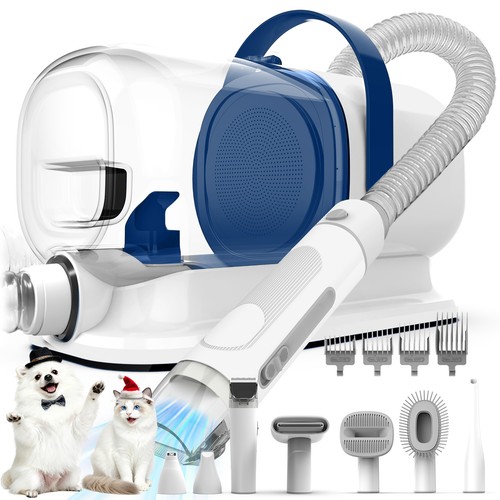
| Grooming vacuum kit (clip-on tool for existing vacuum) | Budget-conscious, existing vacuum owners, experimenting | 6–10 cm | — (depends on vacuum) | — (depends on vacuum) | $ |
The price column compares within this guide: $ is the budget end, $$ mid, $$$ premium. For exact, up-to-date prices, see the live listings lower in the article.
What most buying guides get wrong about deshedding vacuums
Most roundup articles gloss over the most important reality: fur type matters more than vacuum specs. For example, a vacuum that aces Golden Retriever tumbleweeds can choke on Samoyed undercoat or get snarled by wiry Terrier hair. The head width and comb spacing must match your dog’s coat density—too wide, and you’ll miss fine undercoat; too narrow, and you’ll spend forever grooming a Malamute. Noise level is another under-discussed factor: a 75–80 dB vacuum can terrify sound-sensitive dogs, making grooming impossible without desensitisation training.
Another mistake: assuming any “pet hair” attachment is safe for all dogs. Some metal-toothed grooming heads are too harsh for thin-skinned or short-haired breeds, risking irritation or even micro-cuts. Always check for rounded tips and test on a small area first. Finally, don’t overlook fur capacity. A 0.5 L bin fills shockingly fast with a shedding Lab—forcing frequent stops and messy emptying.
Breed and coat-specific advice: what actually matters for your dog
Matching the right deshedding vacuum to your dog’s coat is non-negotiable. Here’s what to watch for:
- Double-coated breeds (e.g. Husky, Akita, Shepherd): Prioritise a high-suction vacuum with a wide, sturdy grooming head (12–15 cm) and strong airflow (minimum 100 AW if listed). Look for anti-tangle features and a large-capacity bin (2 L+).
- Long-haired breeds (e.g. Collie, Retriever): Choose a grooming head with spaced, rounded teeth to avoid snagging, and ensure the vacuum can handle hair lengths of 5 cm or more without clogging.
- Short-haired breeds (e.g. Boxer, French Bulldog): Lower suction and a gentler grooming comb are safer. Stick to compact handhelds (noise under 70 dB) to avoid overwhelming your dog.
- Curly or woolly coats (e.g. Poodle, Doodle mixes): Most vacuums struggle with dense curls. Use a vacuum only after brushing and detangling, and never on mats—vacuum suction can pull painfully on tangled hair.
- Puppies and seniors: Always start with the quietest, softest option. Puppies may need several short sessions for acclimation. For seniors with thin skin, avoid metal grooming teeth.
For more on breed-specific grooming needs, see the UKC’s breed standards and grooming guidelines.
The spec almost nobody talks about: bin capacity and emptying ease
It sounds mundane, but fur bin capacity and emptying design are make-or-break for real-world use. A bin under 1 L fills in minutes with a large, shedding dog—leading to repeated interruptions and, worse, clouds of airborne dander when you empty. Prioritise a vacuum with at least 1.5 L capacity for multi-dog or heavy-shedder homes, and a one-touch, bagless emptying mechanism to keep allergens contained. For allergy-prone families, look for HEPA-level filtration and sealed systems, which can make a meaningful difference in airborne particles.
Quick decision tree
- If your dog is over 50 lbs and sheds heavily: The high-suction upright with a powered grooming head is your best bet.
- If low noise is essential (puppies, anxious, or senior dogs): Opt for the cordless stick with anti-tangle roller or a compact handheld—look for models under 70 dB.
- If you already own a strong vacuum and want to try deshedding: A grooming vacuum kit (clip-on tool) lets you experiment without a major investment.
- If you have multiple dogs or varied coat types: The canister vacuum plus flexible grooming attachment offers the most versatility and capacity.
- If you need a travel or apartment-friendly pick: The compact handheld is light, portable, and easy to empty in small spaces.
Common mistakes: how most people misuse their deshedding vacuums
Over-eager grooming is a top culprit. Running a vacuum grooming head over the same patch of skin repeatedly—especially with high suction—can cause irritation or even bruising, particularly on thin-skinned breeds or seniors. Always keep sessions under 10 minutes per area, and check your dog’s skin frequently for redness.
Another mistake: using a deshedding vacuum on a wet or recently bathed dog. Moisture causes fur to clump and clog the grooming head. Wait until the coat is fully dry and brushed out. Finally, skipping acclimation is a recipe for stress. Gradually introduce the vacuum sound before ever using it on your dog, and offer treats for calm behaviour around the machine. For more detail on safe grooming practices, see Dogs Naturally Magazine.
Related Guides
- Top Dog Deshedding Vacuums That Actually Work
- Dog Anxiety Vests That Actually Work: Reviews and Recommendations
- Our guide to Dog Cooling Bandanas That Actually Work: Top Picks for Hot Weather
- Our guide to Dog Dental Chews That Actually Work: A Guide to Cleaner Teeth
- Our guide to How to Teach Your Dog to Heel: Training Tips That Work
- How to Pick Up Soft Dog Poop in Grass: Tips and Tools That Work
FAQ: real-world questions about dog deshedding vacuums
How often should I use a deshedding vacuum on my dog?
For heavy shedders, once or twice a week during peak shedding seasons (spring and fall) is usually enough. For moderate or low-shedding breeds, every 2–4 weeks is sufficient. Overuse can irritate the skin, so always monitor for redness or discomfort.
Are deshedding vacuums safe for sensitive or anxious dogs?
They can be safe if you choose a low-noise model (under 70 dB) and introduce it gradually. Start by letting your dog investigate the vacuum when it’s turned off, then reward calm behaviour as you slowly increase exposure. Never force a session; stress can make shedding worse.
Can I use a vacuum grooming attachment with my existing vacuum?
Many grooming kits are designed to fit standard hoses, but compatibility varies—measure your vacuum’s hose diameter and check for adapters. Suction power also matters: stick vacuums may not provide enough airflow for effective deshedding on thick coats.
What’s the difference between a deshedding vacuum and a regular pet vacuum?
Deshedding vacuums are built to extract loose fur directly from your dog’s coat using a grooming head, while standard pet vacuums are mainly for cleaning fur off floors and furniture. The grooming attachment is the key differentiator—without it, most vacuums just clean up after the fact.
How long does it take to groom a large double-coated dog with a vacuum?
Expect 15–25 minutes for a thorough session on a heavy shedder like a Husky or Shepherd, assuming a wide grooming head (12–15 cm) and high-capacity bin. Smaller dogs or short-haired breeds may only need 5–10 minutes. Always allow breaks to prevent stress or overheating.
Handheld vs upright: which is better for apartments or small spaces?
Handheld vacuums are lighter, easier to store, and quieter—ideal for apartments or small homes. However, their smaller bins and narrower grooming heads (typically under 9 cm) mean more frequent emptying and longer sessions for large dogs. Uprights offer more power but can be bulky and loud.
What’s the warranty situation for most deshedding vacuums?
Warranties vary, but most mid- and high-end models offer 1–2 years on the motor and major components. Grooming attachments may have shorter coverage. Always check the policy before purchase, and avoid units with no warranty—motors and moving parts can fail with heavy hair loads.
The bottom line: what actually works for real dog owners
The right dog deshedding vacuum isn’t about brand—it’s about matching suction, grooming head, noise, and bin capacity to your dog’s coat and your home. For big, double-coated shedders, invest in a high-suction upright with a powered grooming head and large bin. For smaller breeds, low-noise handhelds or stick vacuums are less stressful and more practical. Always prioritise safety and comfort over speed, and don’t be afraid to trial a grooming kit if you already own a solid vacuum. When you’re ready to clean up the fur for good, check current prices on the best deshedding vacuum setups, view available options for your breed, or compare today’s deals to find the right fit for your home.



Last updated: June 2026 · How we put guides together