7 min read
Disclosure: As an Amazon Associate and eBay Partner Network publisher, we earn from qualifying purchases. This doesn’t affect what we recommend or how we describe it.
How do you pick a dog nail grinder that’s actually safe, effective, and easy to use—without spending too much or ending up with a tool that scares your dog? The real challenge is sorting out which features matter for a typical home user, and which are just marketing fluff. This review breaks down the main categories of dog nail grinders, focusing on what actually works in a busy household, with hands-on details you won’t find in generic buying guides.
What most buyers are really asking about dog nail grinders
Most readers searching “dog nail grinders reviewed” fall into the beginner to intermediate category. You might have tried clippers and found them stressful or too risky, or you’re starting with a puppy and want to avoid splintered nails and bleeding quicks. The top concerns are: Is this tool quiet enough for a nervous dog? Will it grind nails smoothly and safely? Is it strong enough for large breed nails? How long does the battery last? And can you actually use it at home without a second pair of hands or a pro groomer’s touch?
Comparing dog nail grinder categories: What matters in the real world
| Tool Type | Noise Level (dB) | Grinding Speed (RPM) | Power Source | Weight (g) | Price |
|---|---|---|---|---|---|
| Entry-level Cordless | 55–68 | 5,000–6,500 | AA battery | 120–150 | $ |
| Mid-range Rechargeable | 45–55 | 6,000–7,500 | USB Lithium-ion | 120–180 | $$ |
| Heavy-duty Plug-in | 60–70 | 8,000–12,000 | AC Mains | 200–350 | $$$ |
| Manual Rotary File | — | — | Manual | 100–130 | $ |
How noise and vibration impact your dog’s comfort
Dogs are much more sensitive to sound and vibration than humans. Most nervous or rescue dogs will react to anything over 60 dB, which is about the loudness of a normal conversation. Entry-level cordless grinders often run at 65 dB or higher, which can make acclimating your dog tough. Mid-range rechargeable models often run quieter—some as low as 45–50 dB, which is a noticeable difference in a quiet room. For anxious dogs, always check the decibel rating before buying. If you can’t find a published number, avoid the model.
Grinding speed and why it matters for large vs small dogs
Grinding speed is measured in revolutions per minute (RPM). A grinder running below 5,000 RPM will struggle on large-breed nails, often stalling out or taking forever to finish a trim. For small breeds and puppies, 5,000–6,000 RPM is usually sufficient and safer. For adult labs, shepherds, or similar, aim for at least 7,000 RPM. Heavy-duty plug-in grinders can hit 10,000+ RPM, but these are overkill for most home users unless you have multiple big dogs or want truly fast sessions.
Power source: Cordless, rechargeable, or plug-in?
Cordless AA-powered grinders are cheap and convenient but rarely have enough torque for thick nails, and batteries wear out quickly—expect to replace AAs every few weeks with regular use. USB rechargeable lithium models combine portability with better power and usually last 2–4 hours per charge (enough for 8–12 paw trims). Plug-in grinders never run out of power but are bulkier, noisier, and best suited to owners with several large dogs or a home grooming setup. Manual rotary files are silent but require effort and patience; they’re best for dogs who hate vibration or need only minimal shaping.
Safety features worth paying for (and which to skip)
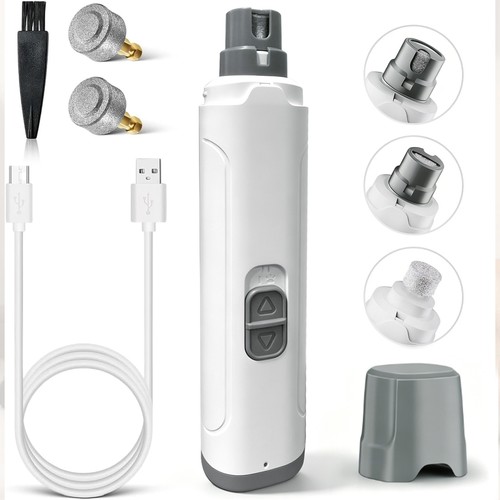
A real safety guard (a hard plastic or metal shield limiting how much nail can enter the grinder) is a plus for beginners, but it’s not foolproof—always check the position of your dog’s quick as you work. Some mid-range models offer two or three speed settings, letting you start slow for shaping and finish fast for smoothing edges. Overheat protection is rarely needed for home use unless you’re grinding many dogs in a session. Look for grinders with at least two sanding drum grits (rough and fine) included—you’ll want the coarse drum for shaping and the fine for smoothing, especially on dark or brittle nails.
Quick decision tree
- If your dog is highly noise-sensitive: Pick a mid-range rechargeable grinder with a published noise rating under 55 dB.
- If you have large or thick-nailed breeds: Choose a plug-in or high-RPM rechargeable model (7,000+ RPM).
- If budget is the top concern: Entry-level cordless or manual rotary files are the most affordable, but expect longer sessions and more effort.
- If you want fast, no-fuss trims for multiple dogs: Heavy-duty plug-in grinders save time but are louder and less portable.
- If you’re trimming puppy or toy-breed nails: A quiet, low-speed cordless grinder is usually safest and least intimidating.
Related Guides
Real-world pitfalls: What frustrates home users the most
Many first-time buyers underestimate how quickly a grinder can heat up a nail—holding it in one spot for more than 2 seconds can cause discomfort or even pain. Always use short, gentle passes and check for heat frequently. Another common issue is sanding drum slippage—on cheaper models, the drum may loosen after a few nails, which can be both annoying and dangerous. Look for models with secure locking mechanisms and replace worn sanding bands after every 3–5 sessions for best results. Finally, don’t ignore ergonomics: a grinder over 200 grams will tire your hand quickly, especially if you’re working on large dogs or fidgety pups.
For more on safe and humane nail care, see the Humane Society’s guidance on pet grooming basics.
Maintaining your grinder for long-term performance
Regular cleaning is essential. Fine nail dust can clog vents and motors, reducing performance and lifespan. After each use, brush away debris and wipe the housing with a dry cloth. For battery-powered models, avoid leaving them on the charger indefinitely—overcharging can shorten battery life. Replace sanding bands frequently; a dull band not only slows the process but can also snag or splinter tough nails. For plug-in grinders, inspect cords for wear and store them loosely coiled to prevent internal wire damage.
FAQ: Practical answers for home users
How long does a typical rechargeable dog nail grinder last per charge?
Most USB-rechargeable grinders run for 2 to 4 hours on a full charge. That’s usually enough for 8 to 12 full nail trims before recharging. Battery life can drop if you use high speed constantly or if the grinder is older than a year.
Entry-level cordless vs. mid-range rechargeable—what’s better for a single small dog?
For a single small dog, a mid-range rechargeable grinder is usually worth the extra cost. It’s quieter, has steadier power, and the battery lasts longer. Entry-level cordless models can work but often struggle to grind tough nails smoothly, and changing AAs gets old fast.
Can I use a dog nail grinder for both large and small breeds?
You can, but you’ll need a model with adjustable speed—low for small dogs, high for large breeds. Heavy-duty grinders can be too aggressive for toy breeds, while low-powered ones will struggle with thick nails. Always check the RPM range before buying.
What’s the most common failure point for home nail grinders?
The most frequent issues are worn-out batteries in cordless models and loose or stripped sanding drums. Batteries typically last 1–2 years with regular use. Replacing sanding bands and storing the grinder properly helps extend its life.
How do I know if a grinder will fit my dog’s nail size?
Most grinders come with multiple guard openings for different nail sizes. For dogs over 50 lbs, ensure the guard fits nails at least 6 mm thick. For toy breeds, look for a small opening to avoid accidental over-grinding.
Can I return a grinder if my dog is too scared to use it?
Return policies depend on the retailer. Most allow returns within 30 days if the tool is clean and undamaged. Check before buying, and save the packaging until you’re sure your dog accepts the grinder. Some specialty pet stores offer in-store demos or trial periods.
Are grinders safe for puppies, or should I wait until they’re older?
Grinders are safe for puppies if used at the lowest speed and introduced gradually. Start with short sessions and lots of treats to build positive associations. Avoid high-RPM or heavy-duty units for puppies under 6 months, as their nails are softer and more sensitive.
For further reading on animal welfare and grooming best practices, see the PetMD site for veterinarian-backed advice.
Last updated: July 2026 · About our research