
8 min read
Can you really crate train a three-year-old rescue dog you’ve had for a year—or is it too late to make the crate a safe, positive place? The answer is yes, you absolutely can, but the process looks different from crate training a puppy or a brand-new rescue. Your dog’s age, history, and your existing bond all shape the path forward. Success depends on patience, realistic expectations, and a few strategic changes to the standard crate training playbook.
Recognise what makes adult rescue crate training unique
Crate training a three-year-old rescue you’ve lived with for a year is not the same as starting with a puppy or a new arrival. Your dog already knows your home, has established routines, and likely formed strong opinions—good or bad—about confinement. Some may have negative associations with crates from past experiences, while others simply never learned to see a crate as a safe space.
At this stage, your dog’s temperament and life history matter more than age alone. Dogs with separation anxiety, for example, may panic when crated, while dogs who crave their own den may take to it quickly. Your job is to identify your dog’s baseline comfort level and adjust your approach accordingly.
Choose the right crate setup for an adult rescue
Not all crates suit every adult dog. Factors like breed size, chewing tendencies, and anxiety levels influence what works. Here’s how the most common crate types stack up for a three-year-old rescue:
| Crate Type | Best For | Ventilation | Escape Resistance | Setup Size Range |
|---|---|---|---|---|
| Wire crate | Moderate chewers, dogs who like visibility | High (80%+ open sides) | Medium | 24-48 in length |
| Plastic (airline) crate | Dogs who prefer cozy, den-like spaces | Moderate (30-40% open) | High | 24-40 in length |
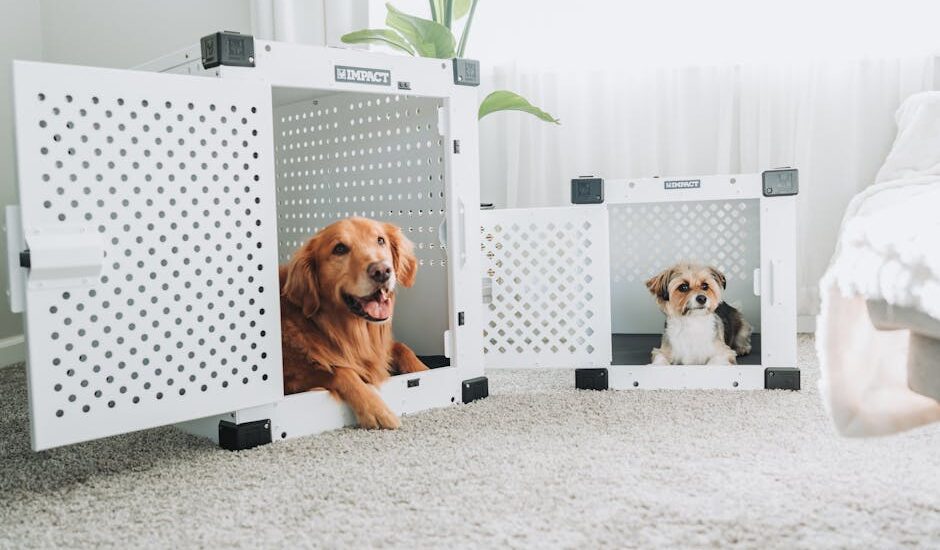
| Heavy-duty crate | Escape artists, extreme chewers | Moderate-High (40-70% open) | Very High | 32-48 in length |
| Soft-sided crate | Calm, crate-trained dogs only | High (70%+ mesh) | Low | 24-42 in length |
| Furniture-style crate | Low-anxiety dogs, aesthetic priority | Varies (usually 30-60% open) | Low-Medium | 30-48 in length |
Step-by-step: How to crate train your 3-year-old rescue dog
- Choose and prepare the right crate. Select a crate large enough for your dog to stand up, turn around, and lie down comfortably—typically 36-42 inches for most medium to large rescues. Line it with a washable mat or blanket, and add a safe chew toy (rated for your dog’s jaw strength).
- Introduce the crate without pressure. Leave the crate door open and toss high-value treats inside. Let your dog investigate at her own pace—no coaxing or closing the door yet. Feed meals near (then inside) the crate to build positive associations.
- Reward voluntary entry and short stays. When your dog steps inside, praise and drop treats. Gradually increase the time she spends inside with the door open, working up to 3-5 minutes of relaxed settling. Keep sessions short—5-10 minutes at first—and always end on a positive note.
- Close the door for brief intervals. Once your dog enters willingly, close the door for a few seconds while you stay nearby. Reward calm behavior, then open the door before she gets anxious. Slowly extend the duration in 10-30 second increments, aiming for up to 15 minutes of calm crating.
- Add distance and duration. Step out of sight for a few seconds, then return and reward. Gradually increase your absence to several minutes, always watching for signs of distress. If your dog whines or scratches, backtrack to an easier step.
- Build up to real-life scenarios. Practice crating while you do normal activities—watch TV, cook, or briefly leave the house. Always return before your dog gets upset. Never use the crate as punishment or leave your dog confined for more than 4-6 hours at a stretch.
Consistency is crucial. For most adult rescues, expect the process to take anywhere from two weeks to several months, depending on your dog’s temperament and past experiences.
Spot the difference between normal protest and crate anxiety
Many adult rescues will test boundaries with short-lived whining or scratching when first confined. This is normal protest, not true anxiety. Look for these signs of actual distress:
- Persistent, escalating howling, drooling, or frantic attempts to escape
- Chewing or biting at crate bars (especially drawing blood)
- Soiling the crate despite being reliably house-trained
If you see these signs, stop and reassess. True crate anxiety may require an alternative management strategy and, in some cases, help from a certified professional. For dogs who simply protest but settle within 5-10 minutes, stick with short, positive sessions and gradually increase duration.
For more on canine anxiety and crate training, the Positively training resource offers evidence-based strategies and troubleshooting tips.
Adjust your approach for breed, size, and past trauma
Breed and background shape how your dog responds to crate training. Large, working breeds (like German Shepherds or Huskies) often need extra space and tougher crates, while smaller breeds may prefer cozier setups. Dogs with a history of neglect or confinement may panic if left alone, and may never fully relax in a crate for extended periods.
If your dog is a power chewer (jaw strength over 150 psi), invest in a crate with reinforced steel bars at least 3mm thick. For anxiety-prone breeds (such as Border Collies or Vizslas), cover part of the crate to create a den effect, but ensure at least 50% ventilation. Always avoid soft-sided crates for escape artists or dogs with destructive tendencies, as they offer little security.
Dogs with previous trauma may require a slower pace—sometimes just sitting near the crate with the door open for days before progressing. If your dog shows severe stress, consult a certified canine behaviorist for a tailored plan.
Related Guides
- Our guide to How to Choose the Right Size Travel Crate for Your Dog
- Tips for Managing a 1-Year-Old, 8-Month-Old Dog’s Behavior
- Is Reverse Sneezing in Dogs Something to Worry About?
- Can Anxiety in Dogs Cause Diarrhea? What Owners Should Know
- Our guide to Can Dogs Overdose on Vitamins? What Every Pet Owner Should Know
- Ceramic vs Stainless Steel Dog Bowls: Which Is Better for Your Pup?
- Browse all Training & Behaviour →
Quick decision tree
- If your dog is an escape artist: Choose a heavy-duty crate with reinforced bars and dual latches.
- If your dog is calm and already likes small spaces: A plastic (airline) crate or furniture-style crate may be more comfortable.
- If price is your main concern: Wire crates offer flexibility and durability at a mid-range price point.
- If you need a crate for travel: Pick a plastic or soft-sided crate (only for already crate-trained, calm dogs).
- If your dog is a moderate chewer with no anxiety: Standard wire or plastic crates are usually sufficient.
Common mistakes to avoid with adult rescue crate training
Owners often make these errors when crate training older rescues:
- Rushing the process—skipping steps or expecting overnight results
- Using the crate for punishment, which creates negative associations
- Leaving the dog crated for long stretches (over 6 hours) without breaks, leading to distress or accidents
- Choosing a crate that’s too small—dogs need at least 6 inches of clearance in length and height
- Ignoring breed-specific needs—some need more space, security, or visual cover
Take your time, and remember that setbacks are normal. If you need to upgrade your crate or add enrichment toys,
FAQ: Real answers to tricky crate training questions
How long does crate training take for a three-year-old rescue?
Most adult rescues need 2-8 weeks to become comfortable in the crate, but some may require several months of gradual work. Dogs with past trauma or anxiety usually progress more slowly. Patience and consistency speed up the process.
Is crate training an older dog different from crate training a puppy?
Yes, older dogs come with established habits—good or bad—and may have prior negative experiences with confinement. You’ll need to move slower, use higher-value rewards, and pay close attention to signs of stress or anxiety.
Wire crate vs plastic crate: which is better for an adult rescue?
Wire crates offer more visibility and airflow, making them ideal for most calm or curious dogs. Plastic crates provide a cozier, den-like feel and are better for anxious dogs who prefer enclosed spaces. For escape-prone or destructive dogs, a heavy-duty crate is safest.
What if my dog barks or whines in the crate?
Short periods of protest are normal, especially with adult rescues. Ignore mild whining if you’re sure your dog doesn’t need to potty. If the barking escalates or continues past 10-15 minutes, revisit earlier steps and reduce crate duration until your dog is comfortable.
Can I crate my dog overnight or while I’m at work?
Adult dogs can usually handle overnight crating (6-8 hours) if they’re comfortable and have had adequate exercise beforehand. For daytime crating, avoid leaving your dog confined for more than 4-6 hours at a stretch without breaks. Arrange for a midday walk or break if needed.
What size crate does my adult rescue need?
Measure your dog from nose to base of tail and add 6 inches to determine crate length. Most medium to large rescues need a 36-42 inch crate; giant breeds may require 48 inches or more. Always ensure your dog can stand, turn, and stretch out comfortably.
What should I do if my dog has crate anxiety?
If your rescue shows persistent distress—howling, drooling, or trying to escape—stop and consult a certified trainer or behaviorist. Force-free desensitisation and alternative management (like gated rooms) may be safer than traditional crating for some dogs.
Why crate training an older rescue is worth the effort
Crate training a three-year-old rescue dog you’ve had for a year is absolutely achievable—and can transform your dog’s confidence and your peace of mind. The key is to go slow, make the crate a source of good things, and respect your dog’s individual needs and history. It’s not just about containment: it’s about giving your dog a safe, predictable retreat in a sometimes overwhelming world. Take the time, choose the right setup, and you’ll see progress—no matter how old your rescue is.
Last updated: July 2026 · How we put guides together