Disclosure: As an Amazon Associate and eBay Partner Network publisher, we earn from qualifying purchases. This doesn’t affect what we recommend or how we describe it.
8 min read
Most dog car barriers on the market promise “universal fit” and “full security”—but in practice, the right barrier for a 12-pound terrier is rarely the best choice for a 90-pound German Shepherd. The single most important thing to know before you shop: car barriers are not one-size-fits-all, and choosing the wrong style or size can leave your dog unsafe, your car scratched, and your nerves frayed. Below, you’ll find a deep dive into which barrier types actually work for different breeds, travel styles, and cars—plus a comparison table built around real-world decision points, not just marketing jargon.
Comparing Dog Car Barriers by Real-World Needs
| Barrier Profile | Best For | Material/Specs | Adjustability | Installation Method | Breed/Weight Suitability | Price Range |
|---|---|---|---|---|---|---|
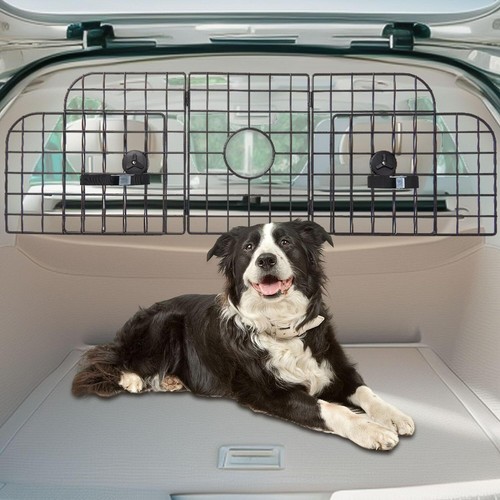
| Heavy-Duty Metal Grid | Large, strong, or high-drive dogs | Steel mesh, 28–48″ width, 18–35 lbs | Telescoping width/height | Pressure-fit or bolt-on | 40–120 lbs (Labs, Shepherds, Huskies) | £70–£150 |
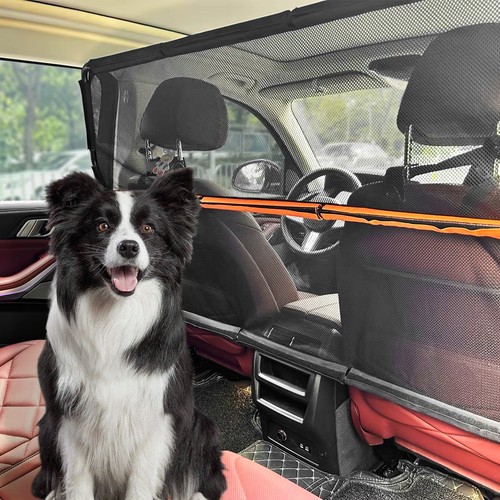
| Soft Mesh Fabric Barrier | Small/medium, calm dogs, frequent removal | Ripstop mesh, 24–45″ width, under 4 lbs | Elastic/strap adjustment | Headrest straps, clip-on | Up to 40 lbs (Corgis, Terriers, Spaniels) | £25–£60 |
| Plastic Panel Barrier | Medium dogs, moderate chewers, budget | ABS plastic, 28–45″ width, 8–12 lbs | Panel height/width sliders | Headrest and floor anchors | 20–60 lbs (Beagles, Bulldogs, Border Collies) | £40–£80 |
| Universal Tubular Bar | Multiple vehicles, trunk-to-cabin separation | Steel/aluminium tubes, 32–55″ width, 12–20 lbs | Telescopic bars, angle adjustment | Pressure-fit only | 30–100 lbs (Retrievers, Dobermans, Boxers) | £60–£110 |
| Fold-Flat Travel Barrier | Frequent travellers, rental cars, quick setup | Collapsible aluminium, 24–44″ width, 5–9 lbs | Quick-fold hinges, flexible straps | Headrest/floor strap | Dogs up to 50 lbs (Cockapoos, Mini Aussies) | £35–£75 |
Amazon tends to carry the widest range of new models with same-week delivery — useful when you’ve already picked your shortlist.
Compare on Amazon →Why Car Barrier Fit and Strength Matter More Than “Universal” Claims
Most car barriers advertise flexible sizing, but that “one size fits all” rarely accounts for the realities of different vehicles and dog builds. A telescoping metal barrier that fits snugly in a Volvo estate may rattle or leave gaps in a compact hatchback, and a mesh panel designed for a 30-pound spaniel can be shredded by a determined Malinois in minutes. Always check the actual width and height range—look for barriers that cover at least 80% of your car’s opening, with no more than a 2-inch gap above, below, or to the sides.
For powerful breeds or dogs with a high prey drive, steel or reinforced aluminium (with bars under 2 inches apart) is essential. For small, calm dogs, soft mesh or plastic panels can suffice—but even then, make sure the material is ripstop-grade and that all straps are double-stitched. A good rule of thumb: if your dog can push over an average kitchen chair, skip mesh and go straight to metal.
Matching Barrier Types to Dog Size, Breed, and Behaviour
Not all dog car barriers are created equal—especially once you factor in breed tendencies and life stage. Here’s how to match barrier type to your dog’s real-world needs:
- Large, strong breeds (Labs, Shepherds, Rottweilers): Opt for a heavy-duty metal grid or tubular bar setup. These typically withstand 70+ lbs of pressure and are less likely to bend or collapse during sudden stops.
- Medium breeds (Border Collies, Bulldogs): A plastic panel barrier works for most, but avoid if your dog is a chewer. Look for panels at least 0.5″ thick.
- Small breeds (Terriers, Dachshunds): Soft mesh or ripstop nylon barriers are usually sufficient. Make sure mesh holes are under 1.5″ to prevent paws or noses getting through.
- Puppies: Even small puppies can squirm through gaps. Choose a barrier with no more than 2″ spacing and avoid anything with easily-chewed straps.
- Senior dogs: Prioritise barriers with smooth edges and easy access—older dogs may struggle with climbing or squeezing through tight spots.
- Anxious or escape-prone dogs: Metal barriers with secure bolt-on installation are harder to dislodge. Avoid soft panels, which can be pushed aside by persistent dogs.
Still unsure which style fits your situation? Compare today’s deals on heavy-duty and travel-friendly options to find the right match for your breed and car.
Critical Safety Considerations Most Owners Overlook
The safety of a car barrier isn’t just about keeping your dog in the back seat. During a crash or emergency stop, a poorly installed or flimsy barrier can become a projectile—putting everyone at risk. Always check:
- Pressure-fit vs. bolt-on: Pressure-fit barriers are easy to install and remove, but can shift under impact. Bolt-on (screw-mounted) models offer superior crash resistance, especially for dogs over 50 lbs.
- Material thickness: Metal barriers should use tubing at least 0.8mm thick; mesh should be double-layered and rated for at least 60 lbs of force.
- Gap size: No single gap (top, bottom, or sides) should exceed 2 inches for medium/large dogs, 1.5 inches for small breeds.
- Anchor points: The most secure barriers attach at both headrest and floor or ceiling, distributing force in a collision.
- Visibility: Choose a barrier that allows clear rear visibility—solid panels can create blind spots, especially in smaller cars.
If you frequently transport multiple dogs or use your car for both pets and cargo, consider a modular barrier that can be adjusted or removed in under 5 minutes. See what’s available in fast-install options.
Common Mistakes When Choosing a Dog Car Barrier
Even experienced owners can get tripped up by a few recurring pitfalls:
- Underestimating strength: Many dogs, especially young adults, can generate far more force than you expect—especially when startled. Always size up if your dog is between barrier size recommendations.
- Ignoring car-specific quirks: Sloped rear seats, raised boot lips, or oddly-placed headrests can make some “universal” barriers a nightmare to fit. Measure your car’s opening at its narrowest point, not just the advertised width.
- Choosing based on looks: Sleek mesh or clear plastic may look better, but metal and reinforced plastic almost always win on safety and durability.
- Skipping regular checks: Barriers can loosen over time, especially with frequent removal. Inspect and tighten fittings every few weeks—especially after long trips or if your dog has leaned or pushed against the barrier.
If you know your dog is a determined escape artist or a heavy chewer, don’t gamble—invest in a heavy-duty option and check current prices on reinforced barriers designed for serious use.
Installing and Adjusting Your Car Barrier for Maximum Security
Proper installation is just as important as choosing the right barrier. Here’s what matters in practice:
- Measure twice: Before buying, check your car’s interior width and height at the intended barrier location. Don’t rely on vehicle “compatibility lists” alone.
- Secure all anchor points: Whether using straps, pressure rods, or bolts, ensure every anchor is snug—loose fittings can render even the best barrier useless.
- Check for movement: After installation, push and pull the barrier from both directions. If it shifts more than 1 inch, reinforce or reposition.
- Test with your dog present: Watch for attempts to squeeze under, over, or around. Adjust as needed before your first drive.
For those switching cars often or transporting dogs in multiple vehicles, fold-flat or quick-release barriers are worth the investment. View available options for travel-friendly picks.
Amazon tends to carry the widest range of new models with same-week delivery — useful when you’ve already picked your shortlist.
Compare Options on Amazon →FAQs: Real Owner Questions About Dog Car Barriers
Do dog car barriers work for all breeds and sizes?
Not every barrier suits every dog. Large, powerful breeds need reinforced metal or tubular barriers, while smaller or calmer dogs may be fine with mesh or plastic panels. Always match the barrier’s rated strength and gap size to your dog’s weight and behaviour.
Are car barriers safe in an accident?
High-quality metal or bolt-on barriers can reduce the risk of your dog becoming a projectile during a collision. However, no barrier guarantees complete crash safety—combine with a seatbelt harness or crate for best protection, especially on the motorway.
How do I know what size barrier to buy?
Measure your car’s interior width and height at the intended installation point, then compare with the barrier’s minimum and maximum size specs. Ensure the barrier covers at least 80% of the opening, and that no gap exceeds 2 inches for medium/large dogs.
Can a determined dog get around a car barrier?
Some dogs, especially anxious or clever breeds, will try to squeeze through gaps or chew through soft materials. For escape artists, choose a metal barrier with secure, multi-point installation and minimal spacing between bars or panels.
What’s better: pressure-fit or bolt-on barriers?
Pressure-fit barriers are easier to install and remove, making them ideal for short trips or rental cars. Bolt-on barriers are much more secure and recommended for large, strong, or high-energy dogs, as well as for long-term use.
Are there car barriers that work in hatchbacks or SUVs?
Yes—many tubular or grid-style barriers are designed to fit the larger, sloped openings of hatchbacks, SUVs, and estates. Always check the barrier’s maximum extension and confirm it can anchor securely to your vehicle’s frame or headrests.
Opinionated Take: Don’t Gamble on “Universal”—Match the Barrier to Your Dog and Car
After years of testing, the biggest mistake I see is trusting “universal fit” claims without considering your dog’s real power and your car’s quirks. For high-energy or large breeds, only a heavy-duty metal or tubular barrier (with the right width and anchor points) offers true peace of mind. For smaller, calm dogs, a soft barrier can work—but only if you check the specs and inspect regularly. Measure, match, and don’t cut corners. Your dog’s safety—and your own—deserve more than a generic solution.
Related Guides
- Top Dog GPS Collars That Actually Work
- Shedding Brushes That Actually Work: Top Picks for Every Dog Coat
- Dog Toothbrushes and Toothpastes That Actually Work
- Dog Cooling Mats That Actually Work: Top Picks for Hot Weather Relief
- Dog Cooling Vests That Actually Work: Our Honest Reviews
- Browse all Buying Guides →