8 min read
Disclosure: As an Amazon Associate and eBay Partner Network publisher, we earn from qualifying purchases. This doesn’t affect what we recommend or how we describe it.
You’re ten minutes into a road trip and already regretting your choice of dog car seat cover. The back seat is slipping, your dog looks uncomfortable, and muddy paw prints are spreading far beyond the “waterproof” claims. If you’ve searched for dog car seat covers reviewed for durability and comfort, you’re likely looking to avoid this scenario — and find a cover that genuinely holds up to your dog, your car, and your life.
This guide cuts through marketing claims to help you choose a car seat cover that won’t let you down after a few uses. We’ll break down which options actually stand up to claws, drool, and restless dogs, what makes a cover comfortable for both short rides and all-day trips, and why not every “universal fit” is truly universal — especially if you drive something other than a standard sedan.
Which Dog Car Seat Cover Holds Up? Comparing Durability, Comfort, and Fit
| Configuration | Best For | Maximum Dog Weight | Padding Thickness (mm) | Waterproof Rating | Price |
|---|---|---|---|---|---|
| Full Bench Hammock | Large breeds, full back seat use | 120 lbs | 8 mm | Rated 4,000+ mm H2O | $$ |
| Single-Seat Bucket | Small/medium dogs, solo seat | 40 lbs | 5 mm | Rated 2,000 mm H2O | $ |
| Split Bench with Zipper | Multi-dog families, flexible seating | 100 lbs per side | 10 mm | Rated 3,500 mm H2O | $$$ |
| Cargo Area Liner | SUVs/wagons, crate users | 150 lbs | 6 mm | Rated 5,000 mm H2O | $$ |
| Luxury Quilted Bench | Comfort-first, anxious dogs | 90 lbs | 15 mm | Rated 3,000 mm H2O | $$$ |
| Budget Thin Liner | Temporary use, rentals | 60 lbs | 2 mm | Rated 1,000 mm H2O | $ |
Pricing key: $ marks the budget tier, $$ the mid-range, $$$ the premium picks. Tiers are relative to the products in this comparison; actual prices update live below.
Why “Durable” Dog Car Seat Covers Fail — and Which Specs Actually Matter
Not all dog seat covers are built for the same level of abuse. If you’ve got a 90-pound Labrador who likes to dig, a thin liner will shred in weeks. Look for covers with fabric denier ratings above 600D — that’s the minimum for resisting claws, especially if your dog is a scratcher or “nest builder.” Some premium covers use 900D or even 1200D Oxford fabric; these stand up to repeated use and machine washing without fraying.
Pay attention to waterproof ratings. A cover labeled “waterproof” means little without a hydrostatic head rating (measured in mm H2O). Anything under 2,000 mm is barely splash-resistant after a few washes. True waterproof covers start at 3,000 mm and up. For dogs prone to accidents or drooling, opt for 4,000+ mm.
Stitching is another weak spot. Double-stitched or heat-sealed seams make a difference, especially for larger breeds. Plastic buckles and seat anchors can snap under a determined dog; metal hardware, while heavier, is a sign the manufacturer expects rough use.
Compare today’s dealsComfort Isn’t Optional: What Makes a Car Seat Cover Dog-Friendly?
Dogs spend hours on these covers, so padding thickness and material matter. Look for at least 8 mm of foam or poly-fill for medium to large breeds. Thin covers (under 4 mm) may as well be a tarp — they don’t cushion elbows or hips, and most dogs will fidget or refuse to settle. For senior dogs or those with joint issues, thicker padding (10-15 mm) can make a noticeable difference in ride quality.
Surface texture also affects comfort. Quilted surfaces offer better grip and warmth, especially in cold climates. Slick nylon or polyester can cause dogs to slide, especially in vehicles with leather seats. Some covers have non-slip backing (often silicone dots or rubberized mesh) that keeps both the cover and your dog in place.
Finally, consider ventilation. Full hammocks can block air vents in smaller vehicles, making the back seat stuffy in summer. Zippered panels or mesh windows help maintain airflow — a small but important detail for longer trips.
See what’s availableBreed and Life Stage: Why One Size Rarely Fits All
A seat cover that works for a 15-pound Pug won’t cut it for a 110-pound German Shepherd. Big dogs need covers rated for at least 100 lbs, with reinforced anchors and wide seatbelt slots. If your dog is a power chewer, avoid covers with exposed zippers or piping; these become chew toys fast.
Puppies and seniors have different needs. Puppies may chew, scratch, or have accidents — opt for covers with chew-resistant edges and the highest waterproof rating you can find. Seniors need extra padding (10+ mm) and a low-slip surface to help them get in and out without slipping.
Multi-dog households benefit from split bench designs with zippers, letting you fold down part of the seat for human passengers or crates. SUV drivers should measure their cargo area: many “universal” liners don’t cover the full space, especially in larger vehicles.
Check current pricesRelated Guides
- Our guide to Dog Life Jackets Reviewed: Which Are Truly Safe and Comfortable?
- Our guide to Dog Seat Belt Harnesses That Actually Keep Your Pup Safe
- Dog Training Clickers Reviewed: Which Ones Stand Out?
- The Best Dog First Aid Kits, Reviewed and Compared
- Our guide to Dog Snow Boots, Reviewed for Winter Adventures
- Our guide to Dog Strollers for Comfort and Convenience
How to Install for Maximum Safety and Stability
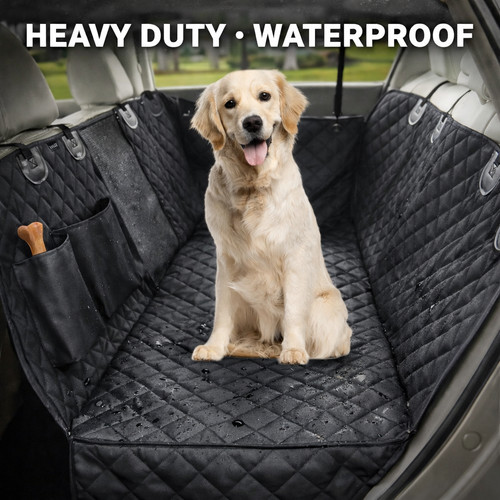
A dog car seat cover is only as good as its installation. Hammock styles should have at least four anchor points (headrest straps front and back) and seat anchors that wedge deep into the seat crease. For dogs over 80 lbs, look for covers with under-seat straps or side flaps that tuck in securely — these prevent shifting during hard stops.
Always check that seatbelt slots align with your vehicle’s buckles. Misaligned slots force you to thread belts at odd angles, reducing both dog and human safety. If you use a harness tether, confirm that the cover’s slots are wide enough (at least 2 inches) to accommodate the hardware.
Never skip using a dog seatbelt or harness, even with a full hammock. The cover protects your seats, not your dog, in a crash. For more on canine travel safety, see these guidelines from the National Highway Traffic Safety Administration.
Common mistakes to avoid
- Assuming “waterproof” means leakproof — many covers labeled as “waterproof” fail after the first wash or under sustained pressure from a large dog. Check for a hydrostatic head rating above 3,000 mm.
- Choosing the wrong size for your vehicle — “universal fit” rarely means perfect fit, especially for trucks, SUVs, or compact cars. Always measure your seat width and length before buying.
- Overlooking anchor quality — weak or plastic anchors can snap or slip, especially with restless or heavy dogs. Opt for covers with metal or reinforced anchors for better security.
- Ignoring padding thickness — thin covers (under 4 mm) offer little comfort or protection, leading to fidgety dogs and potential seat damage.
- Neglecting seatbelt slot placement — poorly aligned slots can make it impossible to secure dog seatbelts or harnesses, reducing both safety and usability.
Dog Car Seat Cover FAQ: Real Owner Questions Answered
How long does a durable dog seat cover typically last?
With proper care, a high-quality seat cover made from 900D+ fabric and double-stitched seams can last 2-4 years of regular use, even with large or active dogs. Cheaper covers may show wear or tear in as little as six months, especially if washed frequently or used by heavy scratchers.
Is a hammock or bench cover better for large dogs?
Hammock-style covers provide more side protection and prevent dogs from falling into the footwell, which is especially helpful for larger breeds over 70 lbs. Bench covers are easier for senior dogs to step onto, but offer less containment. Choose based on your dog’s mobility and how much they move during rides.
Can you machine wash all dog car seat covers?
Most covers rated for durability (600D+ fabric) are machine washable, but check the care label. Thicker or multi-layered covers may require air drying to prevent shrinkage or damage to the waterproof membrane. Avoid high heat, which can degrade waterproof coatings.
What’s the best cover for dogs that shed a lot?
A quilted or tightly woven cover (over 600D) is best for heavy shedders, as hair won’t embed as easily and can be vacuumed off. Avoid covers with deep grooves or loose stitching, which trap fur and make cleaning harder.
How do I know if a seat cover will fit my car?
Measure your seat’s width, depth, and back height, then compare to the manufacturer’s listed dimensions. “Universal fit” covers typically range from 54–58 inches wide, which fits most sedans but may be too narrow for trucks or SUVs. Always check for compatibility with your seatbelt and headrest configuration.
Are there covers that work with heated seats?
Some premium seat covers specify compatibility with heated seats, using materials that allow heat to transfer through (often thinner in the base layer, around 4-6 mm). Never use thick foam or rubber-backed covers with heated seats, as they can insulate too much heat and risk damaging your car’s upholstery.
What should I do if my dog chews through the cover?
Look for covers labeled chew-resistant with reinforced edges and minimal exposed seams. If your dog is a determined chewer, consider adding a crate or barrier during car rides for safety. Some manufacturers offer warranty coverage for damage within the first year — check return policies before purchase.
The Bottom Line: Pick for Your Dog, Not Just Your Car
A dog car seat cover is only as good as its fit for your dog’s size, habits, and comfort needs — and your vehicle’s actual dimensions. Prioritise covers with verifiable durability specs (900D+ fabric, 3,000 mm+ waterproof rating), adequate padding (8 mm minimum for most dogs), and installation features that keep both dog and seat protected. Don’t settle for the cheapest option unless it truly matches your use case. Your dog — and your upholstery — will thank you.


Last updated: July 2026 · How we put guides together