8 min read
Disclosure: As an Amazon Associate and eBay Partner Network publisher, we earn from qualifying purchases. This doesn’t affect what we recommend or how we describe it.
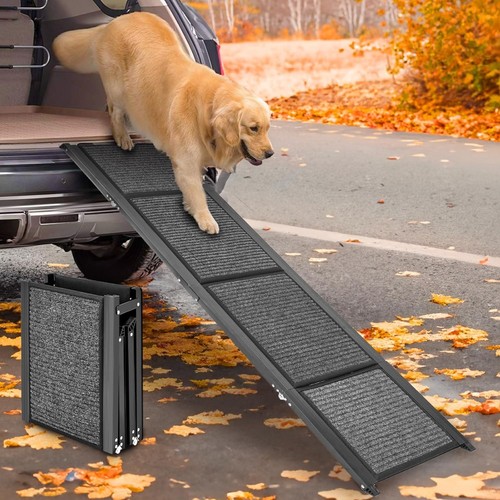
Does a folding ramp really make car travel safer for your aging Lab — or is it just another clunky gadget to store in the trunk? For dogs with mobility issues, joint disease, or breeds prone to back problems, the right car ramp can mean the difference between pain-free outings and a dreaded trip to the vet. But not all ramps are up to the task, and the wrong fit can be more dangerous than no ramp at all. Let’s cut through the noise and see which types of dog car ramps actually deliver — and which are best suited to your dog’s age, size, and travel habits.
What separates a safe ramp from a risky one?
The most important factor in any dog car ramp isn’t the marketing claims — it’s the numbers: weight capacity, ramp length, incline angle, and surface grip. For example, a ramp that’s too short creates a steep climb, which can strain a senior dog’s joints or terrify a nervous pup. A model rated for only 80 lbs won’t cut it for a 95-lb German Shepherd. And if the walking surface is slick, even a healthy dog risks slipping — especially in wet weather or after swimming.
Beyond specs, you also have to consider breed-specific needs. Dachshunds and Corgis, with their long backs, need a gentle incline to avoid spinal strain. Giant breeds need extra width and a higher weight rating. And for dogs with arthritis, a textured, non-slip surface is non-negotiable.
Comparison table: major dog car ramp types and their real-world tradeoffs
| Type | Weight Capacity | Ramp Length | Folded Size | Surface Material | Price |
|---|---|---|---|---|---|
| Folding Lightweight Ramp | Up to 120 lbs | 60″-72″ | 36″x16″x4″ | Textured plastic | $ |
| Telescoping Ramp | Up to 180 lbs | 39″-72″ (adjustable) | 39″x17″x5″ | Coarse grit tread | $$ |
| Heavy-Duty Ramp | Up to 250 lbs | 72″-87″ | 44″x20″x6″ | Rubberized traction mat | $$$ |
| Stair-Step Platform | Up to 150 lbs | 4 steps, 6″-8″ rise each | 32″x18″x8″ | Carpeted steps | $$ |
| Compact Travel Ramp | Up to 90 lbs | 48″-55″ | 24″x14″x4″ | Grooved plastic | $ |
Price: $ = budget, $$ = mid-range, $$$ = premium — relative to the options compared above. Live prices and current stock are below.
Which ramp type fits which dog?
Not every ramp suits every dog — or every car. Here’s how the main categories line up with real-world needs:
- Folding lightweight ramps are the go-to for small to medium breeds (under 100 lbs) and hatchbacks/SUVs with a loading height under 28″. They’re easy to stow, but can flex under heavier dogs.
- Telescoping ramps offer adjustable length, so you can flatten the angle for taller vehicles or anxious dogs. Their coarse tread grips even wet paws, making them a top pick for Labs, Goldens, and other water-loving breeds.
- Heavy-duty ramps are built for giant breeds or dogs with severe mobility issues. They’re bulkier, but their extra length (up to 87″) keeps the slope gentle — critical for Mastiffs, Newfoundlands, or dogs over 120 lbs.
- Stair-step platforms work best for confident, athletic dogs who dislike ramps, but they’re less friendly for dogs with arthritis or short legs. Avoid for Dachshunds or Corgis.
- Compact travel ramps are a compromise for small dogs or short trips, but their short length creates a steep incline for anything over 20″ high. Not recommended for seniors or heavy breeds.
Breed, age, and joint health: how to match ramp to dog
Breed-specific anatomy matters. Long-backed dogs (Dachshunds, Basset Hounds, Corgis) should never be asked to jump in/out of a car — and even a moderate incline can be risky. For these breeds, choose the longest ramp that fits your vehicle, aiming for a slope under 22 degrees. Giant breeds not only need a high weight rating (look for 180+ lbs), but also a wide walking surface (at least 17″ across) to accommodate big paws and reduce the risk of stumbling.
Senior dogs, or those with arthritis or hip dysplasia, benefit from ramps with shock-absorbing surfaces — rubberized mats or thick tread — and low step-over heights. Puppies and healthy adults can tolerate steeper angles for short periods, but it’s wise to get them used to a ramp early, before joint issues develop. If your dog is fearful or hesitant, look for ramps with raised side rails (at least 2″ high) for extra confidence.
See what’s availableCritical safety features: what actually prevents falls and injuries?
Marketing often touts “non-slip” or “anti-skid” surfaces, but the reality is that not all traction is equal. The best ramps use a sandpaper-like grit or thick rubber mat, providing grip even when wet. Look for a ramp surface with a minimum coefficient of friction (COF) of 0.7 or above, which is considered slip-resistant for pedestrian walkways. Avoid smooth plastic, especially for older dogs or those with mobility challenges.
Side rails matter more than most owners realize. For dogs over 60 lbs, or any dog with vision issues, side rails at least 2″ high help prevent missteps. Locking mechanisms are also key: a ramp should have a positive locking latch or safety strap to prevent accidental collapse. Finally, check the ramp’s flex — excessive bounce can scare dogs or cause joint strain. A quality ramp will deflect less than 1″ under full load.
Check current pricesFor more on safe animal handling and mobility, see the ASPCA’s resources.
Related Guides
- How to Train Your Dog to Use a Ramp With Confidence
- Our guide to Agility Starter Kits for Dogs: How to Choose the Right Set
- Dog Conditioners, Reviewed for Every Coat Type
- Why Do Dogs Sleep Under Beds? Understanding This Common Behavior
- Our guide to Dog Heating Pads for Arthritis: What to Know Before You Buy
- Dog Heating Pads That Actually Work: Our Honest Guide
- Browse all Buying Guides →
Common mistakes owners make with car ramps
Even the best ramp can fail if used incorrectly. The most frequent mistake is choosing a ramp that’s too short — a 48″ ramp on a 30″ SUV creates a 38-degree incline, which is unsafe for most dogs. Always measure your vehicle’s loading height (from ground to cargo area) and aim for a ramp length that keeps the angle below 25 degrees for seniors, or 30 degrees for healthy adults.
Another error: not training the dog to use the ramp before the first car trip. Introduce the ramp flat on the ground, reward for crossing, and gradually raise the angle over several sessions. Rushing this step can create a lifelong fear of ramps. Finally, don’t overload the ramp — even if your dog is under the weight limit, repeated jumping or running can cause premature wear or sudden failure.
Quick decision tree
- If your dog weighs over 120 lbs or is a giant breed: Choose the heavy-duty ramp (72″+, 250 lb rating, wide surface).
- If you need something light and easy to store for a small/medium dog: Folding lightweight ramp (under 120 lbs, 60″-72″ length).
- If your vehicle is tall (over 28″ loading height) or you want adjustable angle: Telescoping ramp (39″-72″ adjustable, up to 180 lbs).
- If your dog dislikes ramps but handles stairs well: Stair-step platform (4 steps, carpeted, for confident climbers).
- If trunk space is limited and your dog is under 90 lbs: Compact travel ramp (48″-55″ length, 24″ folded).
FAQ: real-world dog car ramp questions answered
How do I calculate the right ramp length for my SUV?
Measure the vertical height from the ground to your cargo area, then use a ramp length calculator or chart to keep the incline under 25 degrees for seniors. For example, a 24″ height needs a ramp at least 55″ long for a gentle slope.
Telescoping vs folding ramps — which is safer for large breeds?
Telescoping ramps generally offer higher weight ratings (often 180 lbs+) and less flex, making them safer for large or giant breeds. They also allow you to extend the length for a gentler incline, which reduces joint stress.
How long does a typical dog car ramp last with weekly use?
With proper care and moderate use (1-2 times per week), a quality ramp usually lasts 3-5 years. Heavy-duty models may last longer, especially if stored indoors and kept free of grit and moisture that can wear down the surface.
Can I use a car ramp for a dog recovering from surgery?
Yes, but only if the ramp provides a low, stable incline and a high-traction surface. Always consult your veterinarian for post-surgical mobility advice and supervise closely to prevent slips or overexertion during recovery.
What if my dog refuses to use the ramp?
Start ramp training on flat ground with treats and praise, and never force your dog. For especially fearful dogs, use a ramp with side rails and a wide, stable base. If hesitation persists, a short session with a positive reinforcement trainer can help.
Are there ramps that fit both cars and home stairs?
Some adjustable or folding ramps can double as home-access aids, but check the maximum height and weight rating. Ensure the ramp’s grip and stability are suitable for indoor use, and always supervise your dog when using it inside.
What warranty or return options should I look for?
Look for ramps with at least a one-year warranty against defects and a clear return policy (30 days or more). Check for exclusions related to misuse or overloading, as these can void coverage. Reputable manufacturers typically stand behind their weight ratings and construction.
The bottom line: buy for your dog, not just your car
The best dog car ramp is the one your dog will actually use — and that keeps them safe every time. Prioritize the right length, weight capacity, and traction surface based on your dog’s size, age, and confidence. Don’t skimp on safety features like side rails or locking latches if your dog is large or mobility-impaired. And remember: a ramp that’s a perfect fit for a spry young Border Collie may be a hazard for a senior Lab. Choose thoughtfully, introduce gradually, and you’ll make outings easier for both of you.
Last updated: July 2026 · How we put guides together