9 min read
Disclosure: As an Amazon Associate and eBay Partner Network publisher, we earn from qualifying purchases. This doesn’t affect what we recommend or how we describe it.
Most pet product guides will tell you that orthopedic dog beds are a must-have for every pup, but the reality is more nuanced. Not every dog needs a premium orthopedic mattress — and for some, the wrong bed can actually make things worse. So, are orthopedic dog beds worth it? The answer depends on your dog’s age, size, health, and even their sleeping style. Here’s what actual veterinary experts and canine behaviorists say, and what you should consider before investing in a high-end support bed.
What Makes a Dog Bed “Orthopedic” — And Does It Matter?
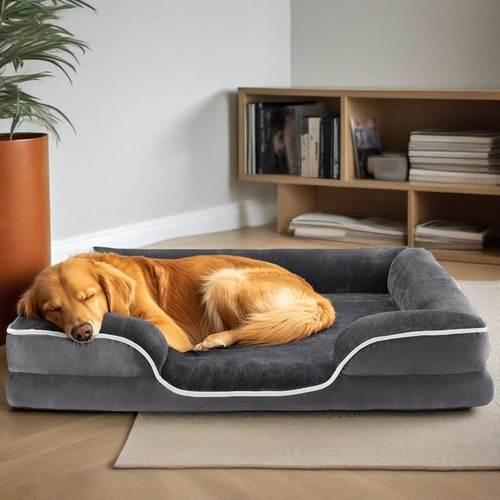
Despite the marketing, there’s no industry-wide standard for what counts as “orthopedic” in pet beds. Most beds labeled this way use memory foam or solid slab foam, typically 2–5 inches thick, to offer pressure relief and joint support. The goal is to keep your dog’s spine and joints in a more neutral position, reducing pressure points — especially for seniors, large breeds, or dogs with arthritis.
Expert consensus is clear: orthopedic foam can make a real difference for dogs with mobility issues, chronic pain, or those prone to pressure sores. However, for healthy, young, or small dogs, the benefits are less dramatic — and sometimes a basic, well-padded bed does the job just as well. True orthopedic beds should have at least a 2-inch dense foam base (ideally 30–50 kg/m³ density) to provide genuine joint support.
Expert Opinions: When an Orthopedic Bed Is Essential
Veterinary rehabilitation specialists, like those certified by the American College of Veterinary Sports Medicine and Rehabilitation, consistently recommend orthopedic beds for:
- Large and giant breeds (over 60 lbs), who are prone to elbow and hip dysplasia
- Senior dogs (age 8+ for large breeds, 10+ for small breeds) with visible stiffness or joint pain
- Dogs recovering from orthopedic surgery or injury
- Thin-coated or low-body-fat dogs (e.g., Greyhounds), who develop pressure sores easily
For these dogs, a supportive bed is not a luxury — it’s a basic comfort measure. The International Veterinary Academy of Pain Management notes that proper bedding can reduce pain-related behaviors and help prevent secondary complications like calluses or ulcers.
On the other hand, for active, healthy young dogs — especially those who prefer to sleep sprawled on cool floors — the upgrade may yield little visible benefit.
Comparison Table: Orthopedic Dog Bed Types and How They Stack Up
| Bed Type | Best For | Foam Thickness | Support Level | Washability | Price |
|---|---|---|---|---|---|
| Full slab memory foam | Large breeds, seniors, arthritis | 4–6 inches | High | Removable cover, machine-washable | $$$ |
| Egg crate foam | Medium breeds, budget buyers | 2–3 inches | Moderate | Removable cover, spot-clean | $$ |
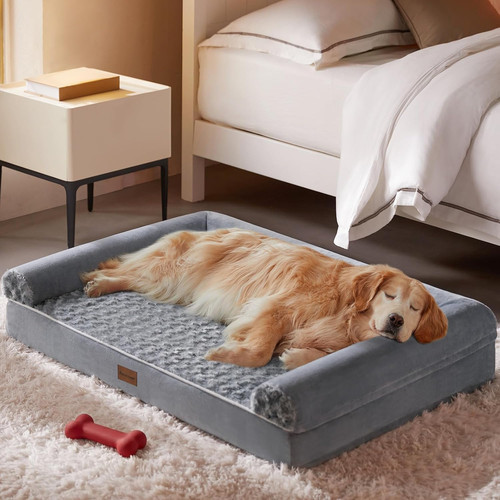
| Bolster with foam base | Dogs who like head support | 3–5 inches (base) | High (base), moderate (bolsters) | Removable cover, machine-washable | $$$ |
| Polyfill “orthopedic” | Small dogs, young adults | 2–4 inches | Low to moderate | Entire bed machine-washable | $ |
| Raised cot with foam pad | Hot climates, outdoor use | 1–2 inches (pad) | Moderate | Pad removable, cot hose-washable | $$ |
Breed and Size: Why One Bed Doesn’t Fit All
Large and giant breeds put much more pressure on their joints, making a thick (4-inch minimum) slab foam bed almost non-negotiable. Breeds like German Shepherds, Labradors, and Mastiffs are notorious for hip and elbow issues as they age. For these dogs, a thin or polyfill bed compresses too easily, offering little real support.
Small and toy breeds, on the other hand, spread their weight over a much smaller area. They can often get away with a 2-inch foam or even a dense polyfill, provided it doesn’t pancake flat within a few weeks. Sighthounds (like Greyhounds and Whippets) are a special case — their bony frames need thick, soft support even at lower body weights.
Always match the bed’s size and foam density to your dog’s weight. A 90-lb dog on a “large” bed with only 2 inches of foam will bottom out, negating any orthopedic benefit.
Life Stage and Health: When to Make the Switch
Most healthy adult dogs under 7 years old, especially those under 30 lbs, won’t show clear signs of needing an orthopedic bed. But as dogs age, cartilage wears down and joint pain becomes more common. Signs your dog may benefit from an upgrade include:
- Reluctance to get up after sleeping
- Limping or stiffness in the morning
- Visible calluses or pressure sores on elbows
- Preference for soft surfaces over hard floors
Dogs recovering from surgery or injury — especially cruciate ligament repairs or spinal surgery — are almost always prescribed supportive bedding for at least 6–12 weeks. Consult your vet for specific recommendations, but in these cases, a 4-inch or thicker foam bed is standard.
Puppies rarely need orthopedic foam unless they have a congenital joint issue. Most will outgrow their first bed before wear and tear sets in. However, if you’re investing in a bed for the long haul, some owners choose a “grow-with-them” orthopedic option to avoid multiple purchases.
Common Owner Mistakes That Undermine Orthopedic Benefits
Even the best orthopedic bed won’t help if it’s the wrong size or density. The most frequent issues seen in practice:
- Buying too small: Dogs should be able to stretch out fully without hanging off the edge. Measure nose-to-tail and add 6–8 inches.
- Choosing foam that’s too thin: Anything under 2 inches is usually inadequate for medium or large breeds.
- Misunderstanding “memory foam”: Not all memory foam is created equal — look for a density of at least 30 kg/m³ for real support.
- Neglecting hygiene: Beds without removable, washable covers trap odors and allergens, which can worsen skin conditions, especially in older dogs.
- Assuming “orthopedic” equals “chew-proof”: Most orthopedic beds are not designed for destructive chewers. If your dog shreds bedding, look for reinforced covers or consider a raised cot style.
Cut corners on size or density, and you’ll end up replacing the bed — or dealing with a dog who still prefers your couch.
Related Guides
Beginner’s pre-purchase checklist
- Measure your dog’s full length from nose to base of tail; add 6–8 inches for bed length.
- Weigh your dog accurately — foam thickness and density should match the weight category.
- Check for a removable, machine-washable cover (confirm zipper quality and wash temp limit).
- Inspect the foam density rating — aim for 30–50 kg/m³ for true orthopedic support.
- Assess your dog’s sleeping style: sprawlers need rectangular beds, curlers may prefer bolsters.
- Look for non-slip bottoms if your dog jumps on and off the bed frequently.
- For chewers, verify the presence of reinforced seams or chew-resistant materials.
Real-World Use Cases: When Orthopedic Beds Pay Off
For senior large-breed dogs with arthritis, an orthopedic bed can mean the difference between a stiff morning and a comfortable rise. Owners of post-surgical dogs often report fewer nighttime whimpers and faster return to mobility when using a high-density foam bed. Even for middle-aged dogs, a quality orthopedic bed can help stave off calluses and joint wear, especially if they spend long hours alone while you’re at work.
On the flip side, owners of healthy, active young dogs sometimes find their pets ignore the fancy bed in favor of a cool tile floor. For them, a basic, washable cushion may suffice — or at least, wait until signs of discomfort emerge before splurging on a premium option. Veterinary Practice News notes that bedding needs often change as dogs age, so be ready to reassess every few years.
FAQ: Orthopedic Dog Beds — What Owners Actually Ask
How thick should an orthopedic dog bed be for a 70-lb dog?
For dogs weighing 60–100 lbs, a minimum of 4 inches of high-density foam is recommended. Less than this and your dog will likely “bottom out,” losing the pressure-relief benefits these beds are designed to provide.
Orthopedic foam vs. memory foam — which is better for joint pain?
True orthopedic foam focuses on density and support, while memory foam emphasizes contouring. For dogs with arthritis or chronic pain, a combination of both — a dense base topped with a thinner memory foam layer — usually offers the best balance of comfort and joint support.
How long does a typical orthopedic dog bed last?
Quality orthopedic beds with high-density foam can last 2–4 years before losing support. Cheaper beds or those with lower-density foam may flatten within a year, especially under heavier dogs. Always check for sagging or thinning, as this means the bed is no longer providing adequate support.
Are orthopedic beds safe for puppies?
Orthopedic beds are safe for puppies, but most don’t need the extra support unless they have a congenital joint issue. Since puppies often chew and outgrow beds quickly, a less expensive, washable option is usually more practical for the first 6–12 months.
Can orthopedic dog beds help prevent hip dysplasia?
While no bed can prevent genetic conditions like hip dysplasia, proper support from an orthopedic bed can reduce discomfort and slow the progression of joint degeneration. For breeds at high risk, bedding is just one part of a broader management plan.
What’s the return policy or warranty on most orthopedic dog beds?
Many premium orthopedic beds offer warranties ranging from 1 to 10 years on foam integrity, but policies vary by manufacturer. Always check return windows and any exclusions for chewing or soiling before purchasing — these are common reasons for denied claims.
Do orthopedic beds retain heat? Are they too warm for summer?
Dense foam beds can retain body heat, which is comforting in winter but may be too warm for some dogs in hot climates. Look for beds with gel-infused foam or breathable covers if your dog tends to overheat.
Should You Invest? The Bottom Line on Orthopedic Dog Beds
If your dog is aging, recovering from injury, or belongs to a breed prone to joint issues, a genuine orthopedic bed (with verified foam thickness and density) is worth every penny. For healthy, young, or small dogs, the benefits are less dramatic — and you may get more value from a basic, well-padded, washable bed. Skip the marketing hype: prioritize measurable support, size, and hygiene over buzzwords. When in doubt, consult your vet or canine rehab specialist — but don’t feel pressured to overspend unless the need is clear. Check current prices on well-reviewed options, see what’s available for your dog’s size and breed, or compare today’s deals if you’re ready to upgrade.


Last updated: July 2026 · How we put guides together